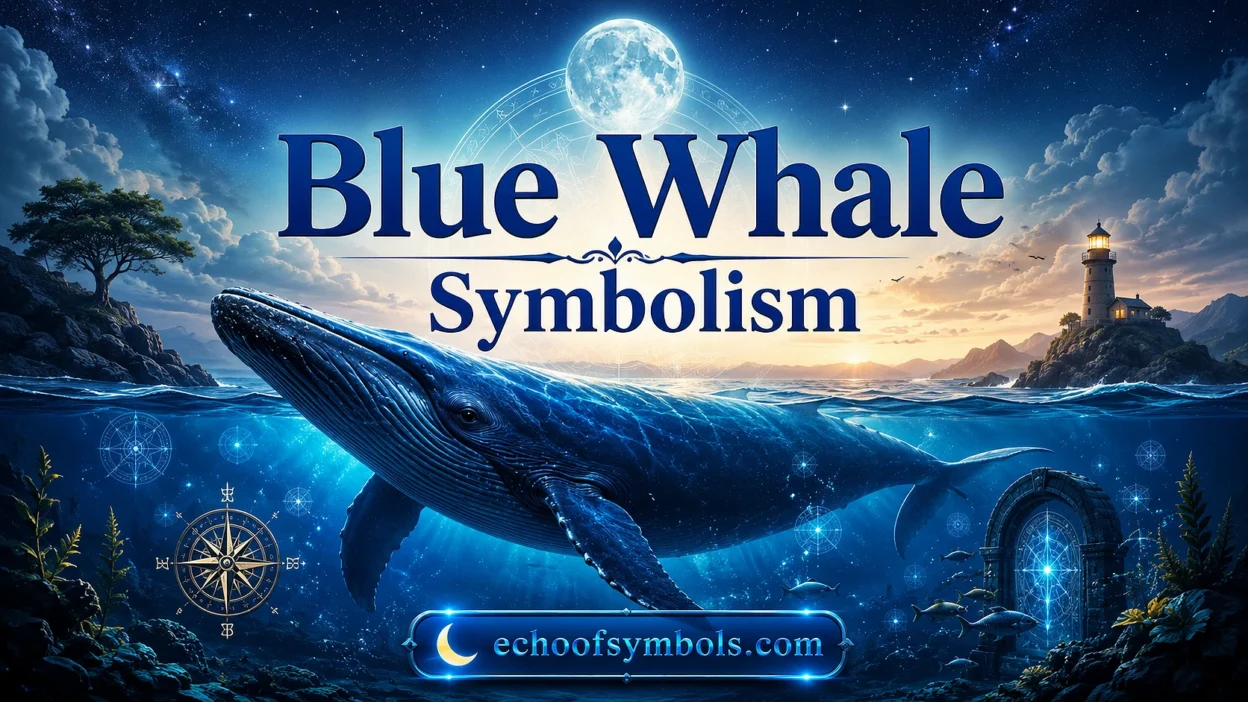
The Blue Whale Symbolism reveals the spiritual meaning behind this majestic blue whale. As the largest animal on Earth, it represents inner power, emotional depth, and peaceful strength.
This spiritual symbol connects vast oceans with mindfulness, personal growth, and ancient wisdom. Many people explore its deep meaning through spirit animal beliefs and reflection.
The blue whale teaches peace in life through balance, awareness, and patience. Its whale totem represents strength and power while honoring emotional healing journeys.
Through whale song, this remarkable animal shares lessons about communication, family, and community. The blue whale size and presence inspire courage, clarity, and a deeper self connection.
Also Read This: Barred Owl Symbolism What It Really Means
Quick Answer
In blue whale symbolism, this animal often represents deep emotional strength, calm power, and quiet wisdom in the United States. Broader spiritual traditions also connect it to intuition, patience, and connection to something greater than yourself. The meaning usually centers on trusting stillness instead of rushing forward.
TL;DR
- Blue whales symbolize deep strength held with calm control.
- They represent emotional depth and quiet inner wisdom.
- In the USA, they are tied to conservation and awe.
- Ocean symbolism connects blue whales to the subconscious mind.
- Some traditions link whales to intuition and ancient memory.
- Modern use includes tattoos, décor, and mindfulness imagery.
What the Blue Whale Symbol Actually Represents
Before exploring history, it helps to understand why this animal carries such strong symbolic weight. Blue whales are enormous, gentle, and slow moving, despite their massive size and power. Because they spend most of their time beneath the surface, they are often linked to hidden depth rather than visible strength.
Their calm, steady movement through open water also shapes how people interpret them emotionally.
How the Symbol Usually Appears
- A massive blue whale gliding calmly through open ocean.
- A whale’s tail rising slowly before it dives deep.
- Soft, low whale sounds carrying across still water.
- Artwork showing a whale beneath calm, quiet waves.
Historical Roots and Ancient Beliefs About Whales
Whale symbolism did not begin with modern nature documentaries. It stretches back centuries, appearing in coastal cultures long before scientific study existed.
Ancient and Pre-Modern Roots
In many early seafaring cultures, whales were viewed with both fear and deep respect. Their massive presence in the ocean led early communities to see them as powerful, almost otherworldly beings. Because of their size and mystery, whales were sometimes treated as guardians of the sea rather than simple animals.
Coastal Indigenous peoples in various regions, including parts of North America and the Pacific, developed traditions honoring whales as wise and spiritually significant creatures. These traditions varied widely, but they often shared a theme of respect rather than fear alone.
From Myth to Modern Symbol
Over time, whale symbolism shifted alongside growing scientific understanding of ocean life. Today, the blue whale specifically is often used to represent scale, patience, and quiet strength. This shift reflects a broader movement toward viewing nature as something to protect and learn from, not just admire from a distance.
Blue Whale Symbolism in the USA
While whale symbolism has old roots, the blue whale holds a distinct place in modern American culture. Because it is the largest animal on the planet, it naturally becomes a symbol of scale and quiet power.
Everyday American Associations
In the United States, the blue whale is closely tied to ocean conservation and environmental awareness. It also represents calm confidence, since the animal moves through the world without needing to rush or prove its strength. In addition, many people connect it to emotional depth and inner resilience.
Blue Whales in National and Cultural Life
Beyond personal meaning, blue whales appear often in museums, documentaries, and educational programs across the country. Conservation groups frequently use the blue whale as a symbol of fragile balance within nature. This steady presence keeps the symbol relevant across generations of Americans.
Cross-Cultural and Spiritual Perspectives
While this article focuses mainly on the USA, blue whale symbolism is not limited to one culture. Many coastal and spiritual traditions across the world share respect for whales, even when the details differ.
In several Pacific Island traditions, whales are viewed as ancestral guides connected to the sea and family lineage. In some Eastern spiritual frameworks, large sea creatures represent deep subconscious wisdom and hidden emotional truth. Other spiritual paths view whales as gentle reminders to slow down and listen inward.
These views are shared respectfully here, without ranking one tradition above another. Readers are encouraged to explore any specific cultural or spiritual teaching that resonates with them personally.
Emotional and Psychological Associations
Beyond history, blue whales carry a strong emotional pull for many people. Their sheer size paired with gentle movement often creates a mix of awe and calm.
What Blue Whale Symbolism Often Signals
- A need to slow down instead of rushing forward.
- Quiet emotional strength that does not need to prove itself.
- A pull toward exploring deeper feelings or memories.
- A reminder that gentleness and power can exist together.
Psychologically, symbols like the blue whale often act as emotional mirrors. In other words, feeling drawn to this animal may reflect a personal need for calm, rather than a fixed outside message.
Blue Whale Symbolism at a Glance
| Context | Common Meaning in the USA | Typical Emotional Association | Notes |
| Whale diving deep | Turning inward, self reflection | Calm, introspection | Linked to exploring emotions |
| Whale surfacing | Insight, emerging clarity | Relief, awareness | Often tied to sudden realization |
| Whale song | Communication, emotional expression | Connection, release | Associated with honest expression |
| Whale in dreams | Deep subconscious message | Curiosity, depth | Meaning depends on dream context |
| Whale tattoo | Strength, emotional depth | Empowerment, calm | Popular symbol of quiet power |
Modern Usage: Tattoos, Décor, and Mindfulness Culture
Blue whale symbolism has expanded well beyond ocean science and folklore. Today, it shows up in casual and reflective spaces across American life.
Where You Might See It Today
- Blue whale tattoos representing calm strength or emotional depth.
- Nursery and home décor featuring gentle ocean themes.
- Mindfulness content using whales to represent stillness.
- Social media posts about slowing down and self awareness.
Interestingly, blue whale imagery often appears in calming or reflective content rather than bold, aggressive branding. Because of this, the symbol still feels soothing, even in a fast moving digital world.
Misunderstandings and Controversies
As with many nature based symbols, some confusion exists around blue whale meaning. Understanding this helps readers avoid mixing up ideas that are not accurate.
Where Confusion Often Starts
One common misunderstanding involves assuming size alone defines the symbolism. In reality, most interpretations focus more on calm strength than physical scale. Another point of confusion involves blending whale symbolism with unrelated conservation debates, which are separate from personal or spiritual meaning.
It also helps to separate symbolic interpretation from real environmental concerns. Blue whales face genuine ecological challenges, independent of any symbolic meaning attached to them.
How Blue Whale Symbolism Has Shifted Over Time
Meaning connected to symbols rarely stays completely fixed. Instead, it evolves slowly as culture and awareness change.
From Feared Giant to Gentle Icon
In earlier centuries, whales were sometimes viewed mainly as mysterious or dangerous ocean giants. Today, especially in wellness and mindfulness spaces, the blue whale is embraced as a symbol of gentle, grounded strength. This shift mirrors a larger pattern in modern culture, which often favors calm resilience over fear based imagery.
When It’s Simply an Animal, Not a Sign
It is worth saying clearly that not every mention of a blue whale needs a hidden message. Blue whales are real animals living within a fragile ocean ecosystem. If you prefer a practical explanation, that view is equally valid.
Choosing a spiritual interpretation does not require rejecting the natural one. Many people hold both views at once, respecting the animal while also reflecting on its symbolic pull.
How to Reflect on Blue Whale Symbolism
If you want to explore what the blue whale might mean for you personally, a few simple questions can help guide that reflection.
- Do you feel pulled to slow down right now?
- Is there an emotion you have been avoiding lately?
- Are you carrying strength quietly instead of showing it?
- Does this symbol appear during a calm or overwhelming time?
There are no required answers here. The goal is gentle reflection, not a strict prediction about the future.
FAQs
What does Blue Whale Symbolism mean spiritually?
The Blue Whale Symbolism represents spiritual meaning, inner power, emotional depth, and peaceful strength. It inspires personal growth through patience, wisdom, and balance.
Why is the blue whale considered a powerful spiritual symbol?
The blue whale is a spiritual symbol of massive potential, ancient wisdom, and strength and power because of its connection with the vast oceans.
What does a whale totem represent in life?
A whale totem represents emotional healing, inner voice, and self connection. It encourages deeper awareness of emotions and actions.
What is the whale tail meaning in symbolism?
The whale tail meaning connects with courage, movement, and transformation. Whale tails often symbolize progress, balance, and navigating life changes.
How does the blue whale connect with mindfulness and spiritual growth?
The blue whale connects with mindfulness, spiritual growth, and deep meaning by reminding people to embrace calmness, reflection, and emotional awareness.
Conclusion
The Blue Whale Symbolism reveals a powerful spiritual meaning connected with inner power, emotional depth, and peaceful strength. This spiritual symbol reminds us to embrace personal growth, mindfulness, and the wisdom found within. The blue whale inspires balance, courage, and deeper connections with ourselves and the natural world.