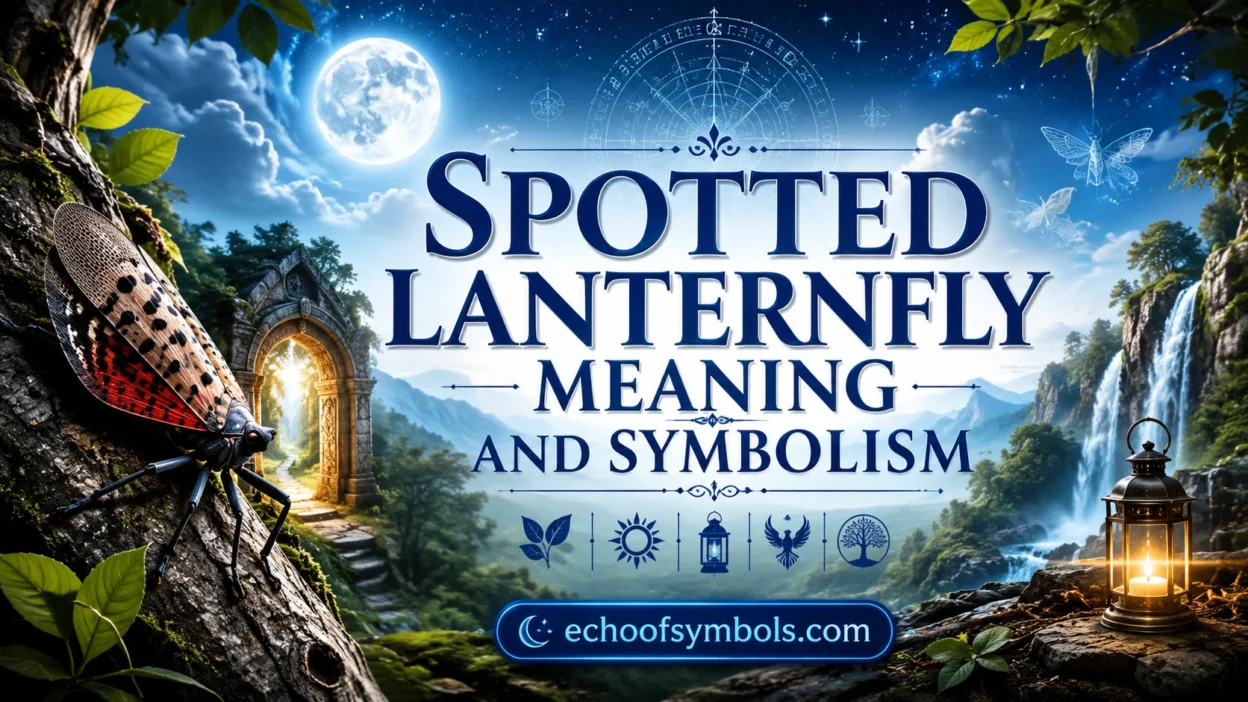
The spotted lanternfly attracts attention through its striking appearance and deeper spotted lanternfly meaning today. Its spotted lanternfly symbolism blends spiritual meaning, symbolic meaning, science, and spirituality with practical understanding.
This colorful insect is an invasive insect, invasive species, and invasive pest known as Lycorma delicatula. Native to East Asia, including China and Southeast Asia, this planthopper belongs to Fulgoridae within Hemiptera.
Today, the United States and North America face growing concerns about its ecology, agriculture, and ecosystems. As a sap-feeding insect and sap feeder, it threatens tree sap, grapevines, fruit trees, hardwoods, trees, shrubs, vines, and hops through rapid species spread.
Beyond ecological impact, this recognizable insect inspires transformation, resilience, balance, self-awareness, personal growth, environmental awareness, and human responsibility toward the natural world. Exploring its history, symbolism, and modern influence reveals valuable practical lessons about adaptation, survival, change, and interconnectedness.
Also read this: 2 Hawks Circling Spiritual Meaning and Symbolism
Quick Answer
The Spotted Lanternfly symbolizes environmental imbalance, hidden consequences, and the importance of protecting native ecosystems in the United States. While its colorful appearance suggests beauty and curiosity, it is more commonly associated with ecological awareness, resilience, and responsible stewardship.
TL;DR
• Represents environmental imbalance and invasive species.
• Symbolizes hidden danger behind attractive appearances.
• Became widely recognized across the United States.
• Encourages conservation and community action.
• Modern meaning developed through real environmental events.
What Is the Spotted Lanternfly?
Appearance and Identification
The spotted lanternfly is a colorful planthopper rather than a true fly. Its folded wings appear gray with black spots, while its open wings reveal brilliant red, black, and white colors.
Its unusual look often surprises people. Because of this contrast, the insect has become a symbol of how first impressions can be misleading.
Why People Notice It
• Bright colors attract immediate attention.
• Large groups gather on trees and vines.
• Distinctive hopping movement makes identification easier.
• Seasonal appearances create public awareness.
The History of the Spotted Lanternfly
From Native Habitat to North America
The spotted lanternfly is native to parts of Asia, including China, Vietnam, and nearby regions. It evolved within ecosystems where natural predators helped control its population.
However, international trade likely carried its eggs to North America. The insect was first identified in Pennsylvania during 2014 and spread rapidly across neighboring states.
A Modern Environmental Story
Unlike ancient symbolic animals, the lanternfly gained importance through modern environmental history. Its spread highlighted how global commerce can unintentionally transport living species across continents.
Today, its history serves as a reminder that human activity can reshape ecosystems in unexpected ways.
What Does the Spotted Lanternfly Symbolize?
Core Meanings
Although symbolic meanings continue to evolve, several themes appear repeatedly.
• Environmental imbalance.
• Unexpected consequences.
• Human responsibility.
• Adaptation and survival.
• Vigilance and awareness.
These meanings come from real-world experiences rather than folklore. People often connect the insect with environmental education instead of mythology.
Spotted Lanternfly Symbolism in the United States
A Symbol of Environmental Awareness
In the United States, the lanternfly has become closely linked with conservation efforts. Government agencies, schools, and local communities encourage people to recognize and report sightings.
For many Americans, the insect symbolizes the need to protect forests, vineyards, orchards, and native wildlife.
Meaning in Everyday Life
| Context | Meaning in the USA | Common Associations | Notes |
| Agriculture | Crop protection | Vineyards and orchards | Economic concern |
| Nature | Ecological balance | Native plants | Conservation focus |
| Education | Public awareness | Community learning | School programs |
| Social media | Environmental updates | Identification tips | Shared experiences |
| Neighborhoods | Community action | Local reporting | Citizen involvement |
Why Its Beautiful Appearance Creates Symbolism
Beauty Versus Reality
One of the strongest symbolic lessons comes from the insect’s appearance. Its colorful wings often inspire admiration before people understand its ecological impact.
Because of this contrast, the lanternfly reminds people that beauty alone does not determine value or harmlessness.
Lessons People Draw
• Attractive appearances may hide larger problems.
• Careful observation matters.
• Nature can be both beautiful and disruptive.
• First impressions deserve deeper understanding.
Cross-Cultural and Spiritual Perspectives
Limited Traditional Symbolism
Unlike butterflies, dragonflies, or owls, the spotted lanternfly has little historical spiritual symbolism. Ancient cultures generally did not treat it as an important symbolic creature.
Instead, modern spiritual interpretations often borrow broader meanings associated with insects.
Contemporary Symbolic Ideas
Some people associate the lanternfly with:
• Personal transformation.
• Adaptability during change.
• Paying attention to overlooked details.
• Respecting the natural world.
These interpretations are personal rather than established cultural traditions.
Emotional and Psychological Associations
What Feelings Does It Represent?
Because of widespread public awareness campaigns, many Americans experience mixed emotions when seeing a spotted lanternfly.
Its appearance can create curiosity, concern, fascination, or even urgency.
Common Emotional Connections
• Curiosity about unusual wildlife.
• Concern for local ecosystems.
• Responsibility toward nature.
• Appreciation for biodiversity.
• Awareness of environmental change.
These emotions help explain why the insect has become more than simply another bug.
Spotted Lanternfly in Modern Culture
Social Media and Public Awareness
The lanternfly appears regularly in online discussions, educational videos, and community updates. Photos often highlight its striking colors while explaining why people should recognize it.
As a result, the insect has become a recognizable environmental icon across many American communities.
Modern Uses
• Educational posters.
• Nature photography.
• Environmental campaigns.
• Community science projects.
• Wildlife identification guides.
Its popularity comes from education rather than decoration or fashion.
Common Misunderstandings and Controversies
Why Confusion Happens
Many people assume brightly colored insects are rare or protected. Others mistakenly believe every colorful insect is dangerous.
The spotted lanternfly demonstrates why accurate identification matters.
Important Clarifications
• It is not a butterfly.
• It is not naturally native to North America.
• Bright colors do not indicate rarity.
• Ecological impact differs from physical danger.
Most concerns focus on environmental damage rather than risks to human health.
How Its Meaning Has Changed Over Time
A New Symbol for a New Era
Before arriving in North America, the spotted lanternfly held little symbolic importance outside scientific study.
Today, it represents broader conversations about climate, invasive species, biodiversity, and global connections.
Evolving Interpretation
Its symbolism continues to grow because environmental awareness has become a larger part of everyday American life. Future generations may view the lanternfly as an important reminder of how closely people and ecosystems are connected.
Why the Spotted Lanternfly Matters Today
More Than an Insect
The lanternfly has become part of larger discussions about environmental responsibility. Its story encourages communities to think beyond individual sightings and consider long-term ecological health.
Lasting Lessons
• Nature changes through human activity.
• Communities can work together.
• Conservation begins with awareness.
• Education supports healthier ecosystems.
• Small species can create major impacts.
Symbolic Lessons for Modern Readers
What People Can Learn
Although the spotted lanternfly lacks centuries of traditional symbolism, it offers meaningful lessons for modern society.
Its story reminds people that beautiful things deserve careful understanding, ecosystems require protection, and individual actions can support healthier environments.
Rather than representing fear alone, the lanternfly encourages awareness, observation, and shared responsibility for the natural world.
FAQs
What is the spotted lanternfly meaning and why is it important today?
The spotted lanternfly meaning combines practical concerns with spotted lanternfly symbolism, spiritual meaning, and symbolic meaning. While this invasive insect creates serious challenges for agriculture, ecosystems, and the natural world, it also reminds people about transformation, adaptation, resilience, and environmental responsibility.
Why is the spotted lanternfly considered an invasive species?
The spotted lanternfly, or Lycorma delicatula, is an invasive species, planthopper, and sap-feeding insect native to East Asia, including China and Southeast Asia. It has spread across parts of the United States and North America, damaging grapevines, fruit trees, hardwoods, trees, shrubs, and other plant species.
What does spotted lanternfly symbolism represent spiritually?
Many people connect spotted lanternfly symbolism with personal growth, self-awareness, balance, hidden wisdom, mindfulness, and change. Its striking spotted wings, red hind wings, and dramatic appearance encourage looking beyond appearances to discover deeper lessons through nature and spirituality.
How does the spotted lanternfly affect the environment and local communities?
The spotted lanternfly threatens local ecosystems, wildlife, forests, and North American agriculture by feeding on tree sap and weakening valuable plants. Its ecological impact has encouraged conservation efforts, pest management, quarantine programs, and greater environmental awareness among communities, residents, and state governments.
How can people help reduce the spread of the spotted lanternfly?
People can limit species spread by checking vehicles, outdoor equipment, patio furniture, and other infested material for egg masses before transport. Supporting risk awareness, following local quarantines, and protecting habitat and ecological balance help reduce the long-distance spread of this agricultural pest.
Conclusion
Spotted lanternfly meaning goes far beyond a single invasive insect, combining spotted lanternfly symbolism, spiritual meaning, science, and nature into valuable lessons about transformation, resilience, adaptation, and human responsibility. As Lycorma delicatula continues affecting North America, United States, agriculture, ecosystems, and the natural world, understanding both its ecological impact and symbolic message encourages wiser choices, stronger environmental awareness, and lasting respect for ecological balance, conservation, and our shared connection with life.