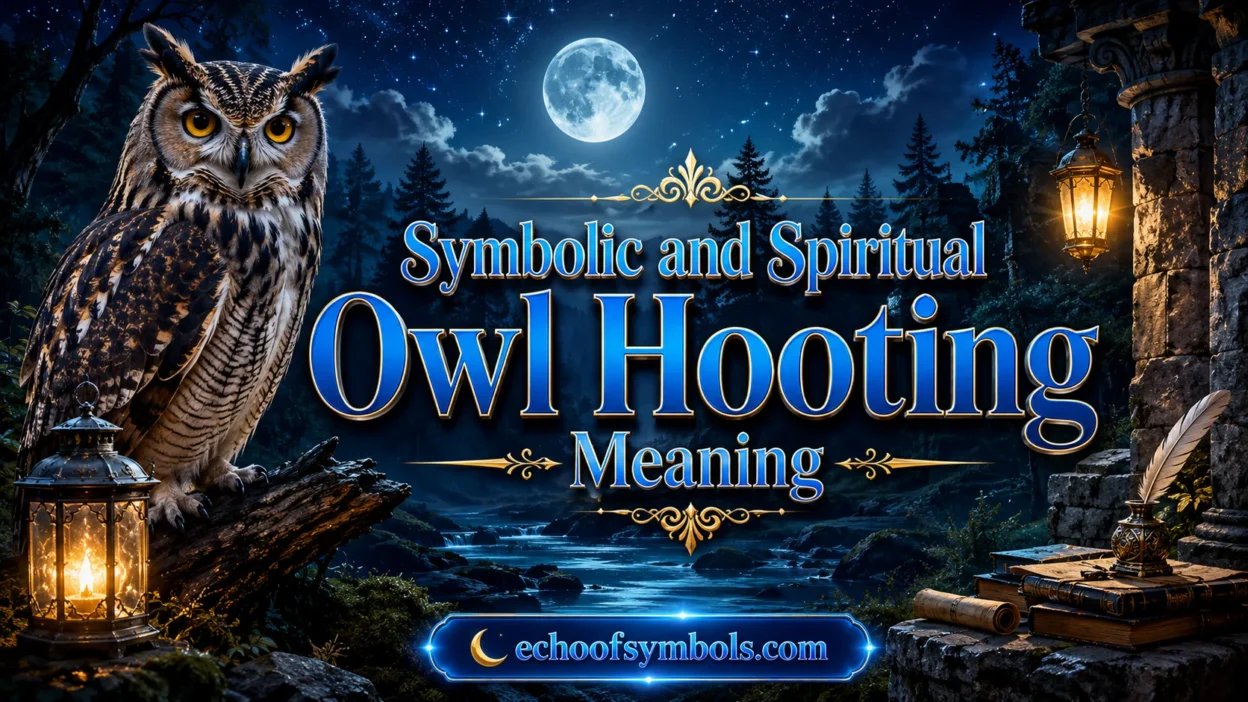
Hearing an owl hooting meaning often sparks curiosity about its hidden messages and deeper symbolism. The symbolic owl hooting meaning and interpretations explores how an owl call connects with wisdom, guidance, and transformation across different cultures.
Many people search for the spiritual owl hooting meaning when they experience an owl hooting at night or notice a mysterious sound nearby. These moments can inspire reflection, inner self awareness, and a deeper connection with nature.
Throughout history, owl symbolism has represented intuition, clarity, and protection during uncertain times. The owl hoot meaning can reflect inner wisdom, spiritual growth, and the courage to embrace change or face fears.
From ancient mythology to modern spiritual practices, owls remain powerful symbols linked with unseen forces, life mysteries, and meaningful encounters with nocturnal creatures.
Also Read This: Dog Howling in Sleep: Spiritual Meaning and Symbolism
Quick Answer
In the United States, the symbolic and spiritual owl hooting meaning and interpretations primarily revolve around intuition, transition, and hidden wisdom. While ancient folklore sometimes linked the sound to warnings, modern Americans mostly view it as a spiritual call to trust your inner voice and embrace positive life changes. 🦉
TL;DR
- Owls represent transition, deep wisdom, and heightened intuition in modern America.
- Historically, their calls carried both positive guides and protective warnings.
- Different times of day alter the spiritual message of the hoot.
- Hearing an owl is a call to look past illusions in your life.
- Modern US culture embraces the owl in art, tattoos, and spiritual practices.
Overview of Owl Hooting Symbolism
Hearing the voice of an owl in the quiet hours of the evening can feel like a direct message from the universe. For many Americans, this experience prompts a moment of quiet reflection in their busy lives. Indeed, the sound invites us to slow down and listen to what our surroundings are telling us.
The Voice of the Night
- Owls use their hoots to mark territory and talk to their mates in the dark.
- The sound serves as a natural reminder that unseen forces are always at work.
- Hearing a hoot often signals a time to pay attention to your secret thoughts.
- The soft, repetitive rhythm mimics a meditative chant that calms the human mind.
Historical Roots and Ancient Folklore of Owl Hoots
Throughout history, humans have struggled to understand the creatures that rule the dark. Consequently, different civilizations created colorful stories to explain the mysterious calls of the owl.
Ancient European and Greek Beliefs
- Ancient Greeks viewed the owl as a sacred companion to Athena, the goddess of wisdom.
- Romans, on the other hand, feared the hoot as an omen of looming disaster.
- Early European healers believed that owl sounds could predict changes in the weather.
- Christian art during the Middle Ages sometimes used the owl to represent solitary reflection.
Symbolic and Spiritual Owl Hooting Meaning and Interpretations in America
In the United States, our view of owl hoots is a rich blend of traditional folklore, media representation, and native beliefs. Today, most Americans interpret the sound as a positive sign of personal growth and mental clarity.
Deep Native American Perspectives
- Some tribes view the owl as a protective spirit guide through difficult times.
- Other traditions associate the hoot with a warning to tread carefully in the dark.
- Many cultures honor the owl as a keeper of sacred, ancient knowledge.
- The sound is often treated as a bridge between the physical and spiritual worlds.
| Spiritual Context | Common US Interpretation | Emotional Resonance | Modern Reaction |
| Dusk or Dawn | New beginnings and fresh perspective | Hopeful and alert | Setting new daily goals |
| Dead of Night | Deep subconscious reflection | Peaceful yet mysterious | Journaling and meditation |
| Outside a Window | Personal message or call to wake up | Startled but curious | Self-examination |
| In the Forest | Connection to mother nature | Grounded and calm | Appreciating the wild |
Spiritual Meanings Behind Different Times of Day
The timing of an owl’s call can completely change how we perceive its spiritual message. Because our energy shifts throughout the day, the universe uses these specific hours to target different areas of our lives.
Hearing an Owl in the Dead of Night
- Nighttime hoots represent a call to explore your deep, hidden emotions.
- Hearing the sound at midnight suggests you need to trust your gut feelings.
- A call during the early morning hours often points to upcoming career transitions.
- Hearing multiple hoots before dawn encourages you to let go of old worries.
Cross-Cultural Interpretations of Owl Calls
While the US has its own unique relationship with these birds, looking at global traditions provides a wider perspective. These diverse ideas show how deeply the owl is woven into human spirituality.
Global Perspectives on the Nocturnal Messenger
- In Japanese culture, owls generally bring good luck and offer protection from suffering.
- Celtic mythology saw the owl as a guide through the underworld and change.
- Hindu traditions associate the white owl with wealth, prosperity, and good fortune.
- Mexican folklore sometimes views the owl as a messenger between different realms.
Emotional and Psychological Associations of Owl Sounds
Our minds react to the low frequency of an owl’s hoot in very specific ways. For example, psychologists note that the sound triggers a state of heightened awareness and curiosity.
The Internal Echo of the Hoot
- The sound often brings up feelings of nostalgia and peaceful solitude.
- Hearing the hoot can help ground people who feel overwhelmed by daily stress.
- It reminds us to embrace the quiet parts of our personality.
- The mystery of the sound encourages creative thinking and artistic inspiration.
Common Types of Owls and Their Unique Calls
Not all owl hoots sound the same, and each species brings its own unique energy to the forest. Understanding these differences helps us identify the specific spiritual message being sent.
Identifying the Sound Makers
- Great Horned Owls make deep, booming hoots that symbolize strength and authority.
- Barn Owls make raspy, eerie screeches that represent sudden, dramatic breakthroughs.
- Screech Owls produce a whinnying sound that encourages playfulness and flexibility.
- Barred Owls ask a rhythmic “who cooks for you” that highlights community bonds.
Modern Usage of Owl Symbolism in US Culture
Today, the owl has flown out of the dark woods and straight into mainstream American lifestyle and design. As a result, the bird has become a prominent icon for self-expression and identity.
Owls in Media, Tattoos, and Decor
- Many people get owl tattoos to represent survival, wisdom, and life transitions.
- Home decorators use owl figurines to bring a sense of warmth and intelligence.
- Social media creators share owl encounters as symbols of manifestation and alignment.
- Educational institutions frequently use the owl as a mascot for academic success.
Misunderstandings and Shifting Meanings of Owl Hoots
In the past, fearful superstitions dominated how people reacted to hearing an owl. Fortunately, modern education and environmental awareness have shifted our perspective toward appreciation.
Debunking the Myths of Bad Omens
- Older movies often used owl sounds to signal cheap horror and doom.
- Modern science shows that hoots are simply vital bird communication, not curses.
- Conservation efforts have helped Americans view owls as helpful partners in the ecosystem.
- Today, hearing a hoot is celebrated as a sign of a healthy local environment.
What to Do When You Hear an Owl Hooting
When you happen to hear an owl call, you do not need to panic or search for complex answers. Instead, you can use the moment to connect with yourself and your immediate environment.
How to Process the Experience
- Pause what you are doing and take a few slow, deep breaths.
- Write down your immediate thoughts or any questions on your mind.
- Express quiet gratitude for the chance to connect with local wildlife.
- Reflect on any areas of your life where you need extra wisdom.
FAQs
What is the owl hooting meaning and why do people find it significant?
The owl hooting meaning is often linked with wisdom, guidance, and intuition. Many cultures view an owl call as a symbol of awareness, reflection, and deeper understanding.
What is the spiritual owl hooting meaning when hearing an owl at night?
The spiritual owl hooting meaning may represent spiritual growth, inner wisdom, and a reminder to trust your instincts. An owl hooting at night is often seen as a meaningful spiritual sign.
What does an owl hoot symbolize in different traditions and beliefs?
The symbolic meaning of owl hoot connects with owl symbolism, knowledge, and protection. In many traditions, owls are viewed as birds as messengers carrying important spiritual messages.
Does hearing an owl hooting have a deeper spiritual message?
Hearing an owl hooting can encourage reflection, connect with nature, and explore personal experiences. Some people interpret this owl message as guidance during life changes.
What is the meaning behind owl hooting and owl encounters?
The meaning behind owl hooting may relate to heightened intuition, transformation, and discovering hidden truths. Many believe owl encounters can bring powerful messages connected with personal growth.
Conclusion
The spiritual owl hooting meaning reveals how an owl call can represent wisdom, guidance, and inner wisdom across many traditions. Understanding the symbolic meaning of owl hoot helps people explore intuition, spiritual growth, and personal reflection. Whether seen as a spiritual sign or a message from nature, an owl hoot interpretation can inspire trust instincts and embrace meaningful life changes.