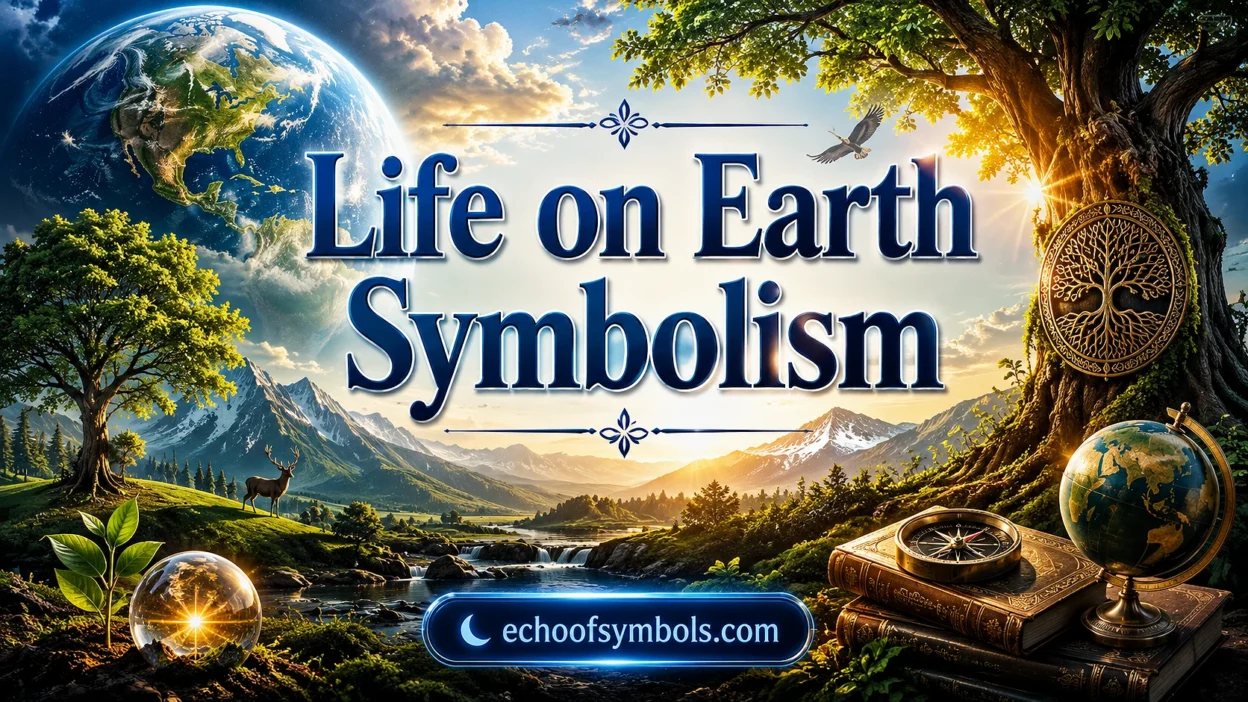
Throughout history, life on earth symbolism has reflected humanity’s search for life on earth meaning. These symbols of life reveal the concept of life and existence of living beings across cultures.
From ancient ideas to nature symbols, people explore universal meaning of life through stories and traditions. These earth symbolism themes connect human history, art, and ritual with deeper reflections.
Today, environmental awareness highlights shared responsibility to protect the planet and preserve ecosystems. Many view earth symbols as signs of interconnected ecosystems and the bond with nature.
Modern interpretations include spiritual meaning, science, and cultural meanings from ancient cultures. These life symbols continue shaping how people understand life, creation, and existence today.
Also Read This: Deep Diving Symbolism and Spiritual Meaning
Quick Answer
Life on earth symbolism mainly represents interconnection, growth, and the balance between all living things. In the USA, it often points to environmental care, unity, and respect for nature. Around the world, it also carries deep spiritual meaning tied to creation and the cycle of life.
TL;DR
• Life on earth symbolism centers on growth, connection, and balance.
• Ancient cultures linked it to creation myths and mother goddesses.
• In the USA, it often connects to nature and environmental care.
• The Tree of Life is one of the most common related symbols.
• Modern use includes Earth Day, art, jewelry, and social media.
• Meanings shifted from pure myth toward science and ecology.
What Life on Earth Symbolism Really Represents
Before looking at history, it helps to see how this idea usually appears. This overview matters because the images used shape how people read the deeper meaning.
Artists and designers use a few common visuals to represent life on earth. Each one carries its own layer of meaning, and people quickly recognize them in art, jewelry, and design.
• A circle or sphere often stands for wholeness and unity.
• Interlocking shapes, like the Seed of Life, suggest connection between all beings.
• A tree with deep roots and wide branches shows growth and balance.
• Green and blue tones connect the image to nature and water.
• A glowing sun or spark often represents the origin of life itself.
Historical Background and Ancient Roots
Ideas about life on earth go back thousands of years, long before modern science explained biology. Understanding these roots helps explain why the symbolism still feels powerful today.
Ancient and Pre-Christian Views
Early societies had no scientific explanation for how life began. Because of this gap, people created myths and symbols to explain existence and honor the natural world.
Many ancient cultures saw the earth as a living being. Others focused on the forces, like sun, water, and soil, that made life possible in the first place.
Sacred Geometry and Early Symbols
• The Seed of Life used seven circles to represent the start of creation.
• The Flower of Life expanded on this pattern to show endless connection.
• Early spirals represented cycles of growth, death, and renewal.
• Ancient sun symbols honored light as the source of all living things.
The Earth as Mother: Ancient Goddess Symbolism
One of the oldest ideas tied to life on earth is the image of a mother figure. This section matters because it shaped how many later cultures viewed nature itself.
Across many ancient traditions, the earth was seen as female. She was viewed as the one who nurtures, feeds, and sustains every living creature.
• Earth Mother figures often represent fertility and abundance.
• She is linked to grounding, stability, and physical security.
• Harvest festivals in many cultures honor this nurturing role.
• Modern spiritual movements still use Mother Earth imagery today.
Life on Earth Symbolism in the USA
Life on earth symbolism carries a distinct flavor in American culture. Its meaning here often blends spiritual language with practical environmental concern.
Because the United States is home to vast and varied landscapes, nature has always shaped national identity. From early conservation movements to modern climate awareness, the idea of protecting life on earth runs deep.
However, this symbolism is not only environmental. Many Americans also use it in a personal or spiritual sense, tied to gratitude, mindfulness, and a sense of belonging to something larger.
• It often represents care for the environment and future generations.
• Many see it as a call for balance between people and nature.
• It can reflect gratitude for the planet’s resources and beauty.
• Some connect it to a spiritual sense of shared human purpose.
Common Symbols of Life on Earth and Their Meanings
This table breaks down a few widely used symbols connected to life on earth and what they tend to represent in the USA today.
| Symbol | Meaning in the USA | Common Associations | Notes |
| Tree of Life | Growth and connection | Roots, branches, balance | Popular in jewelry and tattoos |
| Circle or globe | Unity and wholeness | Planet, community, equality | Common in environmental logos |
| Seed of Life | Origin and creation | Sacred geometry, new beginnings | Used in spiritual art and decor |
| Sun symbol | Source of life and energy | Warmth, vitality, clarity | Frequent in nature-themed design |
| Water drop | Renewal and sustenance | Purity, flow, survival | Tied to conservation messaging |
Native American and Indigenous Views of Life on Earth
Many Indigenous traditions in North America hold a deep connection to the idea of life on earth. Different nations tell different stories, but several shared themes appear often.
For many tribes, the earth is treated as a living relative rather than a resource. This view shapes teachings about respect, balance, and responsibility toward nature.
• Many traditions view all living things as connected relatives.
• Ceremonies often honor the earth for providing food and shelter.
• Teachings emphasize taking only what is needed from nature.
• Oral stories often explain how life and land came into being.
It’s worth noting that beliefs vary widely between tribes and nations. No single story speaks for all Indigenous views of life on earth, so it’s best to treat these teachings with respect rather than as one shared belief system.
Cross-Cultural and Global Spiritual Meanings
Beyond North America, many cultures around the world hold their own views on life and the earth. These perspectives are worth a brief look, since they often shape how Americans understand the topic today.
• Hindu and Buddhist traditions link earthly life to cycles of birth and rebirth.
• Egyptian mythology tied the ankh symbol to eternal life and existence.
• Norse mythology used the World Tree, Yggdrasil, to connect all realms of life.
• Many African traditions honor the earth through harvest and ancestor rituals.
Across these traditions, one theme repeats often. Life on earth is rarely seen as separate from the spiritual world. Instead, the physical and the sacred are viewed as deeply connected.
Emotional and Psychological Meaning of Life on Earth
Beyond history and religion, this symbolism touches something personal for many people. It often reflects emotions and values that feel deeply human.
Because life on earth involves both fragility and resilience, people relate that tension to their own experiences. This is part of why the symbolism feels so meaningful in everyday life.
• A sense of gratitude for existence and daily experience.
• Comfort found in feeling connected to something larger.
• Motivation to protect and care for the natural world.
• A reminder that growth often comes after hardship.
• A grounding feeling of belonging to a larger whole.
Life on Earth in Modern Spirituality
Many people today use spiritual language to describe their relationship with the planet. This modern approach often blends old traditions with personal reflection.
People who feel a strong pull toward nature sometimes describe it as a spiritual calling. This can show up as meditation outdoors, gratitude practices, or simply spending quiet time in green spaces.
• Nature walks are often used as a form of mindfulness practice.
• Some people meditate on earth symbols for grounding and calm.
• Gratitude journaling about nature has become a popular habit.
• Many spiritual communities emphasize care for the planet as a shared value.
Modern Usage: Earth Day, Art, and Social Media
Today, life on earth symbolism appears in many parts of daily American life. This section looks at how people use these images in art, events, and online spaces.
Earth Day and Environmental Movements
Earth Day has become one of the clearest modern expressions of this symbolism. It brings communities together around shared care for the planet.
• Earth Day events often use globe and leaf imagery together.
• Environmental campaigns use these symbols to build shared identity.
• Schools use life on earth themes to teach conservation values.
• Community clean-up events often adopt these symbols in branding.
Art, Fashion, and Online Spaces
People also express this symbolism through personal style and digital content. It often reflects identity as much as belief.
• Nature-inspired tattoos often include trees, suns, or globes.
• Home decor frequently uses earth tones and organic shapes.
• Social media posts about sustainability often use planet imagery.
• Documentaries and nature media keep this symbolism visible to new audiences.
Misunderstandings, Misuse, and Controversies
Like many broad symbols, life on earth imagery can be misunderstood or used in conflicting ways. It helps to separate shared meaning from disputed territory.
Most people use this symbolism to express care, gratitude, or unity. However, environmental topics can also become politically charged, especially around climate policy and land use.
This kind of disagreement is less about the symbol itself and more about differing views on solutions. It’s worth recognizing that people can share respect for life on earth while disagreeing on the best path forward.
• Environmental debates sometimes turn shared symbols into political statements.
• Some groups disagree on how urgently action is needed.
• Spiritual and scientific views of the earth do not always align.
• Respectful use focuses on shared values rather than division.
How This Symbolism Has Shifted Over Time
Ideas about life on earth have changed a great deal across history. Looking at this shift helps explain why older and newer interpretations can feel different.
In ancient times, explanations leaned heavily on myth and religion. Over time, scientific understanding of ecosystems and biology added a new layer to the same symbolism.
• Early views leaned almost entirely on myth and spiritual belief.
• Modern science added ecological and biological understanding.
• Environmental movements added a newer, activist layer of meaning.
• Today’s symbolism often blends spiritual, scientific, and personal views.
FAQs
What is the life on earth symbolism and life on earth meaning?
Life on earth symbolism represents the concept of life, existence of living beings, and the universal meaning of life through nature, culture, and human experiences. It reflects creation, growth, and connection.
What are common symbols of life found across cultures?
Common symbols of life include tree of life, ankh symbol, ouroboros symbol, and other ancient symbols that represent renewal, eternity, and spiritual concepts throughout human history.
How do earth symbols connect with nature symbols and the environment?
Earth symbols connect with nature symbols by showing the importance of ecosystems, interconnected ecosystems, and environmental awareness. They remind people to protect the planet through shared care.
What is the spiritual meaning of Earth and natural elements?
The spiritual meaning of Earth often reflects grounding, balance, and connection with creation. Many traditions view water meaning, plants, and landscapes as powerful cultural symbols.
Why do life symbols remain important in modern culture?
Life symbols remain important through modern art, everyday design, and cultural symbols because they express human values, beliefs, and the changing symbolic representation of existence.
Conclusion
Life on earth symbolism continues to express the life on earth meaning through symbols of life, nature symbols, and earth symbolism. These ideas connect human history, spiritual meaning, and environmental awareness by showing our relationship with nature. Understanding these life symbols helps us appreciate shared responsibility and the importance of protecting our planet.