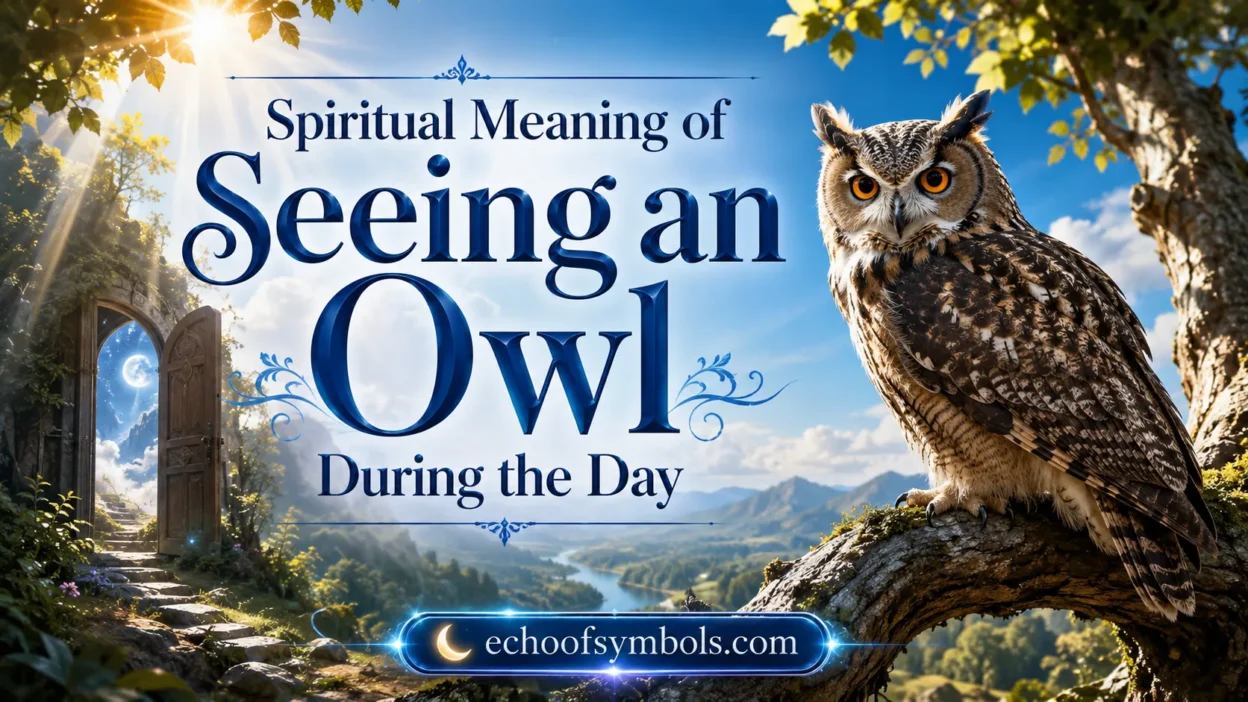
Have you experienced seeing an owl during the day and wondered about its spiritual meaning? This unusual daytime owl owl encounter often inspires curiosity, wonder, and thoughtful reflection.
Many people believe this rare event carries an important owl message filled with guidance, wisdom, and spiritual signs. It may encourage heightened awareness, trust your inner voice, and reveal hidden truths along your spiritual journey.
Across spiritual traditions, Native American symbolism, Greek mythology, Hindu traditions, and folklore, owl symbolism reflects ancestral wisdom, divine guidance, and spirit messenger beliefs.
A daytime sighting of this nocturnal bird can represent personal transformation, spiritual growth, self-discovery, and a deeper spiritual connection. This guide explores meaningful interpretations, cultural symbolism, nature symbolism, and practical life lessons that support your personal growth with greater discernment, awakening, and deeper understanding.
Also Read This: Understanding Black Phoebe Spiritual Meaning and Symbolism
Quick Answer
The spiritual meaning of seeing an owl during the day is often linked to wisdom, hidden truth, and the need to pay attention to your surroundings. In the United States, many interpret this as a call to trust your inner voice or to look past appearances to find clarity. Beyond these personal messages, it represents a bridge between the light of conscious awareness and the mystery of the unknown.
TL;DR
• It symbolizes a call to wake up and notice hidden truths in life.
• Many see it as a reminder to trust your intuition and inner wisdom.
• Historically, owls were both respected for insight and feared as bad omens.
• In modern America, it is often viewed as a sign of personal transformation.
• Seeing one during the day suggests an urgent need for mental clarity.
• It connects the physical world to the mysteries of our subconscious minds.
Understanding the Nature of Owls
Owls are biologically adapted for the night, making a daytime appearance physically unusual. This contrast between their natural cycle and our human waking hours creates a sense of profound wonder. Understanding this bird helps us see why it holds such a deep place in our collective imagination.
Biological Context
Most owl species possess specialized feathers and eyes designed specifically for low-light hunting. When they appear during the day, it is usually because they have been disturbed or are hunting in a territory where prey is active.
• Their silent flight allows them to move through the world largely undetected.
• Large, forward-facing eyes provide depth perception that is essential for sharp hunting.
• Daytime activity is rare and often signals that the bird feels safe.
• These birds are highly adaptable and can thrive in both forests and cities.
Ancient Roots and Mythology
Long before modern interpretations, ancient civilizations held strong views about these birds. While some cultures feared them, others saw them as divine messengers of great knowledge. Tracing these roots helps us understand why we still feel a sense of mystery today.
Symbols of Insight
In ancient Greece, the owl was a companion to Athena, the goddess of wisdom. This link helped cement the bird’s reputation as a creature of intellect and strategy.
• Romans viewed the owl as a harbinger of change or impending death.
• Some Indigenous cultures in North America hold varied, sacred views of owls.
• Ancient stories often depicted the owl as a guide through the darkness.
• Their ability to see what others cannot remains a powerful archetypal theme.
Symbolism in the USA Today
In the United States, the owl has shifted from a frightening omen to a popular symbol of education and curiosity. You will see them in children’s books, school logos, and garden decor across the country. This transition reflects our changing relationship with nature and the unknown.
A Modern Perspective
Most Americans now view the owl as a positive or neutral emblem of intelligence. We have moved away from the darker folklore of earlier centuries toward a more appreciative view.
• Educators use the owl to encourage children to love learning and reading.
• Many people keep owl figurines in their homes as signs of good luck.
• It is a common motif in home decor that emphasizes a cozy, wise atmosphere.
• Social media users often share photos of daytime sightings to celebrate nature.
Comparison of Owl Interpretations
| Setting | Traditional View | Modern USA Meaning |
| Daytime Sighting | Bad Omen | Call to Awareness |
| Nighttime Call | Warning of Danger | Natural Background |
| Artistic Use | Symbol of Mystery | Sign of Wisdom |
| Folklore | Harbingers of Fate | Spirit of Intuition |
Emotional and Psychological Associations
When you encounter a creature as striking as an owl, your emotional response is rarely neutral. You might feel a mix of surprise, reverence, or even a sudden sense of focus. These feelings provide a window into your own internal state and personal needs.
Tapping Into Intuition
Psychologically, the owl acts as a mirror for our need to see the truth. If you see one, ask yourself what “truth” you might be ignoring in your daily life.
• Surprise serves to jolt you out of your routine mental patterns.
• The intensity of the bird’s gaze prompts deep reflection on personal choices.
• Seeing one can evoke a feeling of being watched by a greater power.
• Many find the experience brings a sense of calm and grounded strength.
Modern Usage and Cultural Identity
The owl has become a staple of American identity, appearing on everything from coffee mugs to high-fashion clothing. It is an accessible symbol that allows people to express their values without saying a word.
Beyond the Wilderness
Whether it is a tattoo on an arm or a post on Instagram, the owl is everywhere. It represents a desire for a deeper connection to the natural world in a fast-paced society.
• Tattoos of owls often symbolize protection and a connection to the spiritual.
• Fashion brands use the owl to convey a sense of elegance and mystery.
• Digital emojis of owls help people express wisdom in casual text conversations.
• Garden statues act as protectors of the home and personal space.
Controversies and Misunderstandings
It is important to remember that not everyone views the owl with fondness. In some older traditions, the owl was seen as an omen of bad luck. Keeping an open mind allows us to appreciate how these meanings have evolved and diversified over time.
Navigating Different Views
While many Americans see the owl as a lighthearted or wise creature, we should respect the diverse roots of these beliefs. Conflicts often arise when people project fear onto a bird that is simply living its life.
• Some people still hold onto old superstitions regarding death and omens.
• It is helpful to view these negative labels as products of a bygone era.
• Respecting the bird as a living animal is just as important as its symbolism.
• Understanding different views helps us appreciate the complexity of our cultural heritage.
FAQs
What is the spiritual meaning of seeing an owl during the day?
The spiritual meaning of seeing an owl during the day often points to wisdom, guidance, and a meaningful spiritual message. This unusual daytime sighting may encourage heightened awareness, trust in your inner voice, and greater spiritual growth during an important life transition.
Is a daytime owl considered a spiritual sign?
Many people view a daytime owl as one of the meaningful spiritual signs connected with owl symbolism and divine guidance. Such a rare event can inspire self-discovery, personal transformation, and a stronger spiritual connection with your spiritual journey.
What does an owl encounter symbolize in different cultures?
An owl encounter holds unique meanings across Native American symbolism, Greek mythology, Hindu traditions, and other spiritual traditions. These beliefs often connect the owl with ancestral wisdom, hidden truths, discernment, and a respected spirit messenger between the physical world and spiritual world.
Why is owl symbolism linked with intuition and hidden truths?
Owl symbolism is closely associated with intuition, hidden truths, and deeper understanding because owls are admired for their sharp gaze, quiet flight, and observant nature. They remind people to practice reflection, trust intuitive guidance, and embrace personal growth through greater awareness.
What should you do after an owl sighting during daylight?
After an owl sighting in daylight, take time for reflection, observe your surroundings, and consider any life lessons the experience may reveal. Keeping journal prompts about the owl message can help strengthen mindfulness, spiritual insight, and your connection with nature symbolism and the unseen world.
Conclusion
Seeing an owl during the day is a meaningful experience that can carry deep spiritual meaning, offering wisdom, guidance, and a powerful spiritual message for your spiritual journey. Through owl symbolism, many spiritual traditions connect this rare event with intuition, personal transformation, spiritual growth, hidden truths, and self-discovery.
Whether viewed through Native American symbolism, Greek mythology, or Hindu traditions, this unique owl encounter encourages reflection, greater awareness, and trust in your inner voice. By embracing these insights, you can build a stronger spiritual connection, gain deeper understanding, and move forward with confidence and purpose.