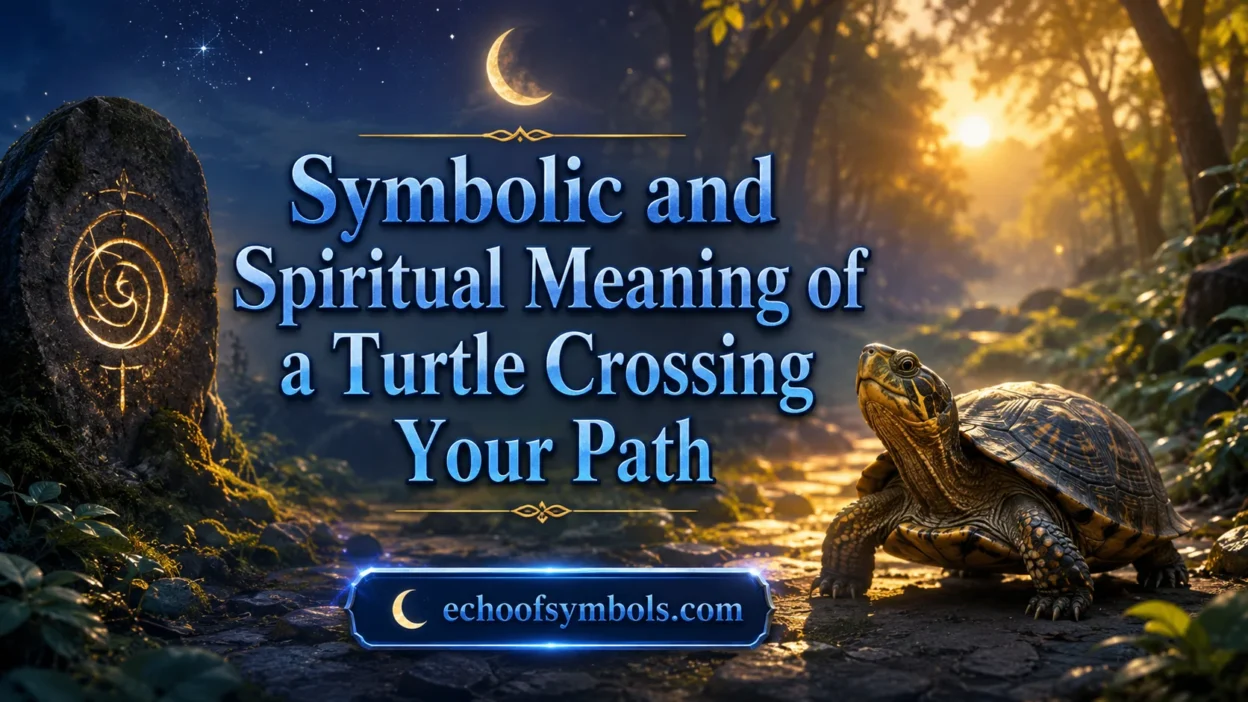
A turtle crossing your path often carries deep spiritual meaning and lasting symbolic meaning. Across folklore, traditions, and American culture, turtle symbolism reflects wisdom, protection, longevity, and balance.
This remarkable ancient creature encourages patience, resilience, steady progress, and trust your journey through every life journey. Whether spotting a sea turtle, land turtle, or tortoise meaning, each meaningful encounter offers valuable life lessons and gentle spiritual guidance.
Many people believe seeing a turtle brings a meaningful spiritual message from the spirit world. Its protective shell, shell symbolism, and earth connection inspire grounding, inner reflection, mindfulness, peaceful living, and inner peace.
During life transitions, this sacred symbol reminds you to slow down, embrace your own pace, and build steady foundations for lasting success. Understanding turtle spiritual meaning and turtle meaning can deepen intuition, personal growth, transformation, awareness, and your true life purpose.
Also Read This: The Black Cat with Green Eyes Spiritual Meaning
Quick Answer
In the United States, the symbolic and spiritual meaning of a turtle crossing your path represents a powerful message to slow down, practice patience, and trust your personal journey. It serves as a spiritual sign of emotional protection, physical endurance, and a deep, grounding connection to the earth.
TL;DR
- Turtles symbolize peace, stability, and steady progress.
- They urge us to slow down our fast-paced lives.
- Their tough shells represent emotional safety and boundaries.
- Native American traditions honor them as world creators.
- Modern encounters serve as signs of healing and persistence.
Understanding the Appearance and Behavior of a Turtle
When a turtle crosses your path, the way it looks and acts can offer deeper clues to its spiritual message. The turtle is a masterpiece of natural design, carrying a balance of hard protection and soft vulnerability. By observing its physical traits, we can better understand what this gentle messenger is trying to tell us.
The Shell as a Shield
The most obvious feature of a turtle is its hard, protective shell. This shell represents the boundaries we build to protect our peace of mind. It tells us that we have the power to protect ourselves from negative energy.
Water and Land Connections
Many turtles live between the damp earth and the flowing water. This dual nature symbolizes a balance between our practical daily lives and our deep, flowing emotions. It encourages us to stay grounded while honoring our feelings.
Steady, Deliberate Movement
A turtle does not rush, even when it is in danger. Instead, it takes deliberate, measured steps toward its goal. This slow movement reminds us that consistency is far more valuable than reckless speed.
Ancient Roots and the Historical Evolution of Turtle Symbolism
Throughout history, humans have looked at the turtle with immense respect and wonder. Because they live for decades, and sometimes centuries, they have long been linked to the concepts of time, history, and immortality. Their ancient roots show that our modern fascination with them is nothing new.
Mythological Foundations
In many ancient creation myths, the turtle is the literal foundation of the universe. Some Asian cultures believed the flat underbelly of the shell represented the earth, while the curved upper shell represented the dome of the heaven. This made the turtle a living bridge between the human world and the divine.
Pre-Christian Interpretations
Before modern religions spread, early pagan and earth-based cultures viewed the turtle as a symbol of the fertile earth. Because they lay many eggs and live near water, they were closely tied to lunar cycles and female energy. They represented the slow, natural cycles of planting, growing, and harvesting.
- Ancient Greeks associated the quiet turtle with the goddess Aphrodite.
- Early Roman myths viewed the turtle as a sign of domestic peace.
- Celtic lore celebrated the creature for its quiet, ancient wisdom.
- Mesopotamian traditions linked the turtle to the protective god Enki.
The Sacred Meaning of the Turtle in Native American Culture
For Native American tribes, the turtle is not just a symbol, but a sacred being deeply woven into the creation of the continent. To understand the spiritual meaning of a turtle crossing your path in the US, we must look at Indigenous traditions. Many Native cultures refer to North America as Turtle Island.
The Creation of Turtle Island
According to famous Lenape and Iroquois stories, the earth was once covered entirely by deep water. A great turtle offered its massive back to support the mud that would eventually become dry land. Therefore, the turtle represents the literal foundation of life, survival, and ancestral history.
The Thirteen Moons
A turtle’s shell often has thirteen central scales, which many Indigenous peoples mapped to the thirteen full moons of the lunar year. This natural calendar connected the turtle to the flow of time and the changing seasons. It taught people to live in harmony with the natural rhythm of the earth.
Modern Spiritual Meanings of a Turtle Crossing Your Path in the USA
In the United States today, encountering a turtle is often viewed as a highly personal spiritual sign. In a culture that values instant gratification, the turtle stands as an ancient rebel, refusing to rush. When one crosses your road, it is widely seen as a message from the universe.
A Message to Slow Down
The most common interpretation in modern America is the call to reduce stress and anxiety. We are often told to hustle, but the turtle reminds us that rest is sacred. It encourages us to breathe, look around, and enjoy the present moment.
Trusting Your Unique Pace
In a competitive society, it is easy to feel like we are falling behind our peers. The turtle reminds us that everyone has a unique path and timeline. Your progress, no matter how slow, is still moving you forward.
- Seeing a turtle suggests you should trust your current life timeline.
- It reminds you that slow progress is still progress toward goals.
- It prompts you to focus on your own lane instead of competing.
- It signals that rushing a project might cause mistakes.
Emotional and Psychological Associations of the Turtle
Beyond spirituality, the turtle carries deep psychological weight for modern Americans. Psychologists and wellness experts often use the turtle as a metaphor for mental health and emotional well-being. The animal reflects how we handle stress, boundaries, and self-care.
Healthy Boundaries and the Shell
When life becomes too loud or overwhelming, a turtle pulls its head and limbs inside its shell. Psychologically, this represents the importance of stepping back to recharge. It teaches us that saying no and setting boundaries is healthy.
Emotional Resilience
Turtles carry their homes wherever they go, showing that true safety comes from within. This symbolizes emotional independence and resilience. It suggests that you have all the tools you need to survive inside yourself.
| Symbolic Context | Core Meaning in the USA | Emotional Association | Practical Lesson |
| Crossing a paved highway | Navigating modern obstacles | Courage and determination | Stay focused even when the environment is harsh |
| Resting near a quiet pond | Inner peace and reflection | Calmness and emotional balance | Take time to sit with your thoughts and heal |
| Hiding inside its shell | The need for self-protection | Vulnerability and boundaries | It is okay to retreat and recharge your energy |
| Digging in the dry dirt | Grounding and hard work | Persistence and patience | Build strong foundations for your future dreams |
Cross-Cultural and Spiritual Perspectives
While the US has its own unique relationship with the turtle, other global cultures offer beautiful, matching insights. These perspectives enrich our understanding of what the turtle represents on a global scale. They show that respect for this creature is a universal human trait.
Eastern Philosophical Views
In Chinese feng shui, the black tortoise is one of the four celestial guardians, representing the direction of the north and the element of water. It brings energy of support, steady wealth, and physical protection to a home. Placing a turtle figure near the back of a house is believed to secure the family’s future.
African and Caribbean Folklore
In many African folk tales, the tortoise is portrayed as a clever trickster who uses wits to overcome larger animals. These stories traveled to the Americas and evolved into traditional African-American folktales. They teach us that intelligence and patience will always triumph over brute strength.
Modern Usage in American Culture, Decor, and Identity
The turtle remains a highly popular icon in contemporary American lifestyle and design. From permanent body art to digital expression, people use the turtle to communicate who they are and what they value. It is a symbol of a peaceful, nature-loving lifestyle.
Tattoos and Body Art
Turtle tattoos are incredibly popular in the US, often representing a survivor’s mindset. People get them to mark the end of a difficult period, symbolizing that they survived by taking one slow step at a time. It also represents a deep love for travel, ocean conservation, and coastal living.
Home Decor and Lifestyle Branding
In coastal towns and suburban homes alike, turtle imagery is used to create a relaxing, peaceful atmosphere. In branding, organic food companies and slow-fashion labels use the turtle to represent sustainability and care. It tells consumers that the product was made with respect for time.
- People use turtle emojis to signal they are working slowly but surely.
- Garden statues of turtles are placed to invite peace into yards.
- Conservation groups use turtles to highlight the fragility of marine life.
- Parents use turtle characters in books to teach kids about patience.
Misunderstandings, Misuses, and Shifting Meanings
While the turtle is almost universally loved, there are some common misunderstandings about its behavior and care. In the past, people sometimes treated wild turtles as cute toys rather than wild animals. Today, the way we interact with them is shifting toward deep respect and conservation.
The Danger of Relocation
A common mistake is picking up a crossing turtle and moving it too far away from where it was heading. Turtles have a strong sense of direction and are usually searching for water or nesting ground. If you move them to a new area, they will get lost trying to find their way back.
Shifting toward Active Conservation
In the past, people might have simply driven past a turtle without a second thought. Today, social media is full of educational posts teaching drivers how to safely help a turtle cross the road in the direction it was already traveling. This shift reflects a growing American desire to protect our local ecosystems.
FAQs
What Is the Spiritual Meaning of a Turtle Crossing Your Path?
The spiritual meaning of a turtle crossing your path often points toward patience, steady progress, and trust your journey. It serves as a gentle spiritual message encouraging inner reflection, balance, and confidence throughout your life journey.
What Does Turtle Symbolism Represent Spiritually?
Turtle symbolism is closely linked with wisdom, longevity, protection, grounding, and harmony. Many traditions view this sacred symbol as a source of spiritual guidance, personal growth, transformation, and lasting inner peace.
Is Seeing a Turtle Considered a Good Spiritual Sign?
Yes, seeing a turtle is widely viewed as an auspicious omen and a meaningful symbolic encounter. It reminds you to slow down, embrace your own pace, overcome life challenges, and build steady foundations for lasting success.
What Is the Difference Between Turtle Meaning and Tortoise Meaning?
Both turtle meaning and tortoise meaning symbolize endurance, perseverance, resilience, and determination, although their environments differ. A sea turtle often reflects emotional flow and adaptability, while a land turtle emphasizes stability, security, and a strong earth connection.
What Does a Turtle Mean in Dreams or as a Spirit Guide?
The dream meaning of turtle in dreams often highlights intuition, awareness, and the need for mindful living. As a spirit animal, animal totem, turtle totem, or power animal, the turtle represents ancient wisdom, quiet strength, protection, and guidance toward your true life purpose.
Conclusion
Whether you experience a turtle crossing your path once or often, its spiritual meaning and symbolic meaning encourage patience, resilience, steady progress, and trust your journey. Rich turtle symbolism reminds us that lasting personal growth, balance, wisdom, and protection develop through a thoughtful life journey. By embracing turtle spiritual meaning, listening to your intuition, and following gentle spiritual guidance, you can face life transitions with confidence, discover greater inner peace, and move closer to your true life purpose.