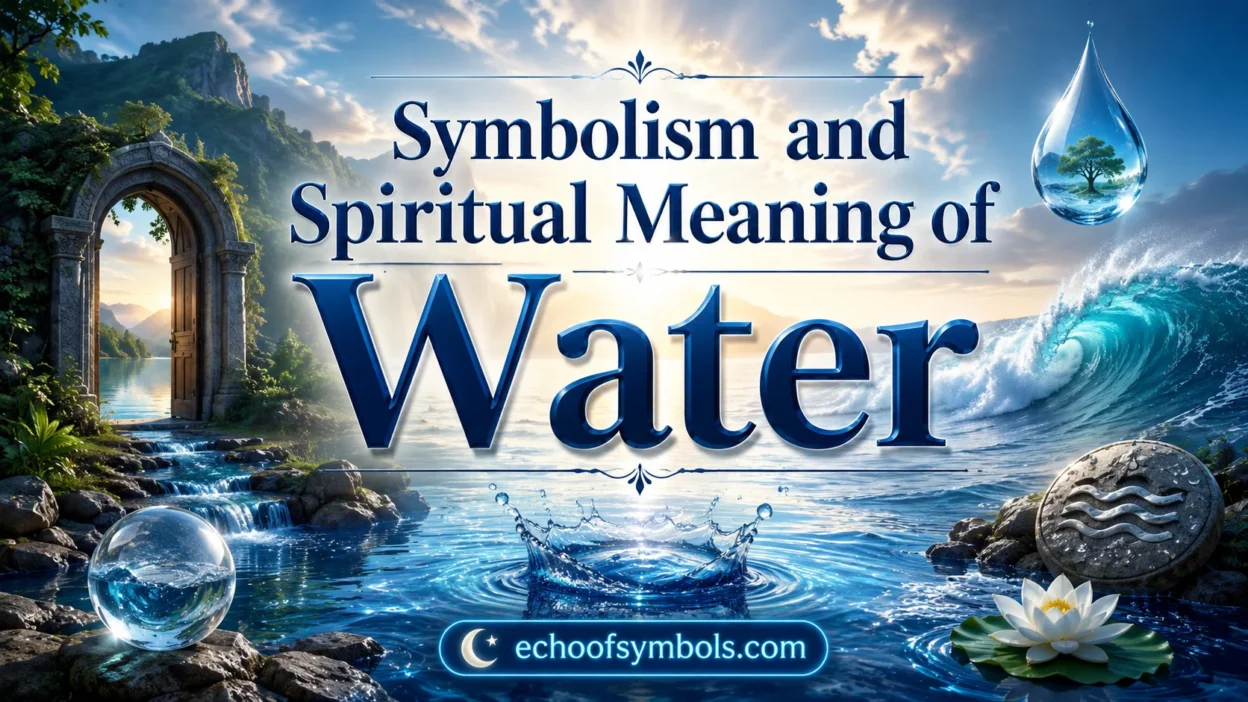
Water has carried deep meanings throughout history, with water symbolism appearing in many traditions and cultures. Exploring the spiritual meaning of water reveals connections between purification, healing, and renewal.
Across human history, water has represented life force, transformation, and spiritual growth. Many people view this universal symbol as a sign of interconnectedness and balance.
The element of water reflects emotions, intuition, and the ongoing cycles of nature. Through spiritual traditions across cultures, water shows spiritual symbolism linked with rebirth and change.
From sacred stories to modern lives, water remains a source of personal transformation and emotional healing. Its meanings connect the physical world with the human spirit through reflection and renewal.
Also Read This: The Symbolic and Spiritual Meaning of Dog Peeing on You
Quick Answer
The symbolism and spiritual meaning of water represents life, purification, and the constant flow of transformation. In the United States, it is frequently associated with emotional depth, baptismal rebirth, and the restorative power of nature. Globally, it remains an archetype for both the beginning of existence and the unpredictable nature of the human subconscious.
TL;DR
• Water symbolizes life, renewal, and the cleansing of the physical and spiritual self.
• Ancient cultures viewed water as the primordial source from which all creation emerged.
• In the USA, water often represents emotional healing, tranquility, and a connection to nature.
• Psychological perspectives link water to the subconscious mind, intuition, and deep inner feelings.
• Modern uses include therapeutic practices, wellness trends, and artistic expressions of peace and calm.
The Elemental Nature of Water
Water is defined by its ability to change shape, flow around obstacles, and sustain life. Because it lacks a fixed form, it serves as a blank canvas for human projection and meaning. In American culture, we often look to water as a mirror for our own inner states.
Physical Appearance and Presence
Water appears in many forms, each carrying a slightly different nuance of meaning. Whether it is a calm lake or a powerful crashing wave, the context matters immensely.
• Still water reflects clarity, introspection, and a quiet, meditative state of mind.
• Flowing rivers symbolize the passage of time, progress, and moving forward in life.
• Ocean waves represent the power of the subconscious and the intensity of emotions.
• Rain is often viewed as a symbol of renewal, growth, and cleansing the spirit.
Ancient Roots and Historical Evolution
Humanity has always lived near water, which is why it holds such a deep place in our collective history. Before modern plumbing and science, water was a direct gateway to the divine for many early civilizations.
Origins in Myth and Ritual
Across ancient cultures, water was frequently described as the womb of the world. It was the medium through which life entered the physical plane, often appearing in creation stories where the earth rose from a vast, watery void.
• Egyptian mythology viewed the Nile as a life-giving force linked to cosmic order.
• Greek legends often featured water nymphs and gods who guarded the sanctity of springs.
• Ancient Mesopotamian narratives frequently centered on the struggle between order and chaotic waters.
• Many early belief systems utilized water as a medium for communicating with ancestral spirits.
Symbolism and Meaning in the USA
In the United States, water symbolism is deeply influenced by our vast geography and our cultural traditions. We treat water as a symbol of both recreation and profound spiritual significance.
National Identity and Cultural Associations
Americans often associate water with the idea of a “fresh start” or a frontier to be explored. This perspective stems from our historical reliance on rivers for westward expansion and the sea for international trade.
| Context | Meaning in the USA | Common Associations | Notes |
| Baptism | Spiritual Rebirth | Purity and Faith | Found in many Christian traditions. |
| The Coast | Freedom and Escape | Adventure and Peace | Represents the “end” of the land. |
| Home Decor | Calm and Serenity | Relaxation and Wellness | Fountains and beach art are popular. |
| Storms | Change and Power | Resilience and Nature | Viewed as an unpredictable force. |
Emotional and Psychological Associations
Water is perhaps the most significant symbol for the human subconscious. Many thinkers have suggested that the depths of the ocean mirror the depths of our own hidden thoughts and feelings.
Understanding the Internal Flow
When we feel “swamped” or “in over our heads,” we are using water imagery to describe emotional stress. Conversely, when we seek to be “refreshed,” we look to water to soothe our internal state.
• Clear water signifies a peaceful mind and a sense of emotional honesty.
• Murky or dark water often represents confusion, hidden fears, or unresolved trauma.
• Floating on water signals a willingness to surrender and trust in the process.
• Diving deep indicates a desire to explore the unknown parts of oneself.
Modern Usage and Digital Life
Today, water remains a staple in our modern visual language. From social media aesthetics to personal wellness routines, we constantly engage with the symbolism of water.
Tattoos, Trends, and Pop Culture
You might see water represented through minimalist wave tattoos, ocean-scented candles, or digital art that prioritizes blue hues. These symbols help us cultivate a sense of identity centered on calmness.
• Wave tattoos are a popular choice for representing strength, change, and personal movement.
• Blue color palettes in interior design are used to create a soothing home environment.
• Wellness influencers often promote “water rituals” to encourage mindfulness and daily intention setting.
• Social media filters often use water reflections to convey a dreamy or nostalgic tone.
Misunderstandings and Controversies
While water is overwhelmingly positive, it can also be a symbol of destruction. When dealing with floods or hurricanes, the cultural interpretation of water shifts from a life-giver to a powerful, indifferent force of nature.
Navigating the Duality
It is important to respect that for some, water is a source of anxiety rather than comfort. Neutrality is key when discussing how water manifests in our lives, recognizing both its beauty and its capacity for chaos.
• Flooding is often framed as a symbol of loss, disruption, and the need for renewal.
• Droughts are interpreted as a spiritual or environmental warning about imbalance and neglect.
• Coastal erosion serves as a reminder of the fragility of our physical foundations.
• Misuse of the symbol can occur if one ignores the harsh realities of water-related disasters.
Shifts Over Time
The way we view water has changed alongside our technological and environmental awareness. We have moved from seeing it as a mystical, limitless resource to understanding it as something that requires protection and stewardship.
From Mystery to Stewardship
In the past, water was seen as an infinite mystery. Today, that symbolism is increasingly tied to the idea of sustainability. Protecting our waters has become a modern form of spiritual duty for many.
• Shift toward seeing water as a shared, fragile resource that demands human responsibility.
• Recognition that nature-based spirituality is a growing movement in modern American life.
• Deeper focus on how water accessibility shapes justice and equality in our society.
• Greater appreciation for the psychological benefits of being near natural bodies of water.
FAQs
What is the spiritual meaning of water and why is it important?
Water holds deep spiritual symbolism connected with purification, healing, and renewal. Many traditions view water as a universal symbol of life force, representing transformation and spiritual connection.
How does water symbolism represent transformation and growth?
Water symbolism reflects transformation, spiritual growth, and personal change through its natural movement. Its ability to flow and renew represents rebirth, emotional healing, and new possibilities.
What does water represent in different spiritual traditions and cultures?
Across spiritual traditions and cultures, water represents purity, source of life, and a connection between the physical and spiritual worlds. It is often viewed as a sacred element with profound meaning.
Why is water considered a symbol of emotional healing and inner peace?
Water represents emotional healing, emotional balance, and inner peace because it reflects calmness, depth, and renewal. Many people connect water with reflection, meditation, and restoring harmony.
How is the element of water connected to human life and spirituality?
The element of water is a powerful symbol of interconnectedness, survival, and spiritual renewal. As a vital part of forms of life, water reflects the connection between nature, humans, and spiritual energy.
Conclusion
Water remains a powerful universal symbol of transformation, purification, and spiritual renewal across spiritual traditions across cultures. The spiritual meaning of water reflects healing, interconnectedness, and the deep connection between life and nature. Through water symbolism, people discover lessons of emotional healing, personal transformation, and inner balance. This timeless nature element continues to inspire spiritual reflection and human understanding.