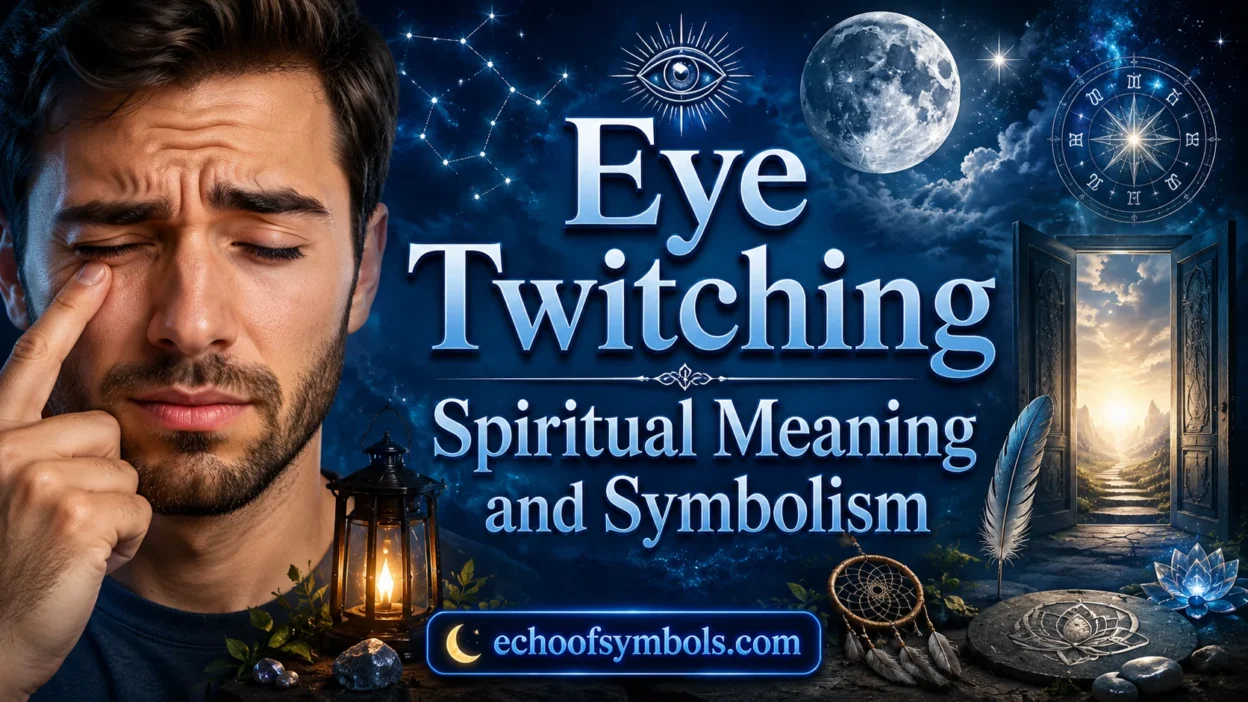
Have you wondered whether eye twitching spiritual meaning reveals hidden spiritual significance beyond ordinary physical causes? Many people explore eye twitching symbolism, seeking symbolic meaning, spiritual guidance, and trusted medical understanding together.
This guide explains eye twitching interpretation through science, spiritual traditions, cultural beliefs, and ancient wisdom. You will discover balanced insights connecting intuition, subconscious, inner guidance, and everyday experiences without unnecessary fear.
Whether experiencing left eye twitching, right eye twitching, or upper right eye twitching, every physical occurrence deserves thoughtful consideration. We examine left eye spiritual meaning, right eye spiritual meaning, spiritual message, universe messages, energy shifts, and spiritual awakening alongside stress, fatigue, dry eyes, and possible medical condition concerns.
You will also explore eye twitching superstitions, folklore, mythology, different cultures, United States, Americans, and practical viewpoint perspectives. This balanced approach encourages personal reflection, self awareness, emotional awareness, personal growth, and informed decisions whenever symptoms persist.
Also read this: Snake Symbolism: Understanding What Snakes Really Represent in America
Quick Answer
Eye Twitching Spiritual Meaning and Symbolic interpretations often represent heightened awareness, personal transformation, or emotional shifts in the United States. While there is no scientific proof that eye twitching predicts future events, many spiritual traditions view it as a reminder to pay attention to thoughts, relationships, or life changes.
TL;DR
• Eye twitching often symbolizes awareness, change, or intuition.
• Scientific and spiritual explanations can exist side by side.
• American culture usually treats these meanings as personal beliefs.
• Different cultures interpret left and right eye twitching differently.
• The symbolism has evolved from ancient traditions to modern spirituality.
What Is Eye Twitching?
Eye twitching is a small, repeated movement of the eyelid that happens without conscious control. Most episodes last only a few seconds or minutes, although some may continue longer. From a symbolic perspective, many people believe these tiny movements carry messages about emotions, awareness, or future events.
For readers in the United States, eye twitching often sits at the crossroads of health discussions and spiritual curiosity. Understanding what it is helps separate physical causes from symbolic interpretations.
A Physical Experience With Symbolic Meaning
An eye twitch usually affects either the upper or lower eyelid. It may happen once or repeat several times throughout the day.
Although medical professionals commonly connect eye twitching with fatigue or stress, spiritual traditions often view the same event differently. Rather than focusing on muscles, they emphasize personal growth or unseen energy.
Why People Search for Spiritual Meanings
Many people become curious when a twitch appears during an emotional moment or an important life event. This timing encourages reflection, even if it is simply a coincidence.
Common reasons people explore symbolic meanings include:
• Experiencing major life changes.
• Feeling emotionally overwhelmed.
• Seeking reassurance during uncertain times.
• Looking for personal spiritual guidance.
• Wondering whether repeated twitching has deeper meaning.
Eye Twitching Spiritual Meaning
Across many modern spiritual communities, eye twitching is viewed as more than a random physical event. Instead, it becomes an opportunity for self-reflection and increased awareness. These interpretations are personal beliefs rather than established facts.
In the United States, symbolic meanings often blend ideas from mindfulness, personal growth, and older cultural traditions.
Increased Awareness
Many believe eye twitching reminds people to become more aware of their surroundings and emotions.
Rather than predicting specific events, it may encourage someone to notice important conversations, changing relationships, or overlooked opportunities.
A Period of Transformation
Spiritual traditions frequently associate eye twitching with personal change.
This change may involve:
• Emotional healing after difficult experiences.
• Beginning a new chapter in life.
• Letting go of outdated habits.
• Developing greater confidence.
• Becoming more connected with personal values.
Listening to Intuition
Many symbolic interpretations connect eye twitching with intuition.
Instead of relying only on logic, some believe the twitch encourages people to trust their inner judgment while remaining thoughtful and balanced.
Left Eye Twitching Spiritual Meaning
The meaning of a left eye twitch changes greatly between cultures. Some traditions consider it fortunate, while others view it as a warning or reminder. There is no universal interpretation.
In the United States, people often treat these beliefs as interesting folklore rather than firm predictions.
Positive Interpretations
Some spiritual traditions associate the left eye with emotional wisdom and inner reflection.
Possible symbolic meanings include:
• Personal growth through experience.
• Stronger emotional awareness.
• Renewed creativity.
• Unexpected positive opportunities.
• Greater self-understanding.
Cautious Interpretations
Other traditions encourage extra awareness when the left eye twitches.
Rather than expecting something negative, believers may simply pay closer attention to decisions, relationships, or communication.
Because interpretations vary so widely, context often matters more than the twitch itself.
Right Eye Twitching Spiritual Meaning
Just like the left eye, the right eye has many symbolic interpretations around the world. Some traditions describe it as fortunate, while others assign different meanings depending on age, gender, or cultural background.
Americans who explore symbolism usually interpret right eye twitching in flexible and personal ways.
A Symbol of Opportunity
Many spiritual beliefs connect the right eye with forward movement and progress.
It may represent:
• New beginnings.
• Career opportunities.
• Positive conversations.
• Growing confidence.
• Encouraging life transitions.
Energy and Action
Some modern spiritual writers believe right eye twitching symbolizes active energy.
Instead of waiting for change, it encourages taking thoughtful action toward meaningful goals.
This interpretation fits well with today’s emphasis on personal responsibility and intentional living.
Historical Origins of Eye Twitching Symbolism
Beliefs about eye twitching are thousands of years old. Long before modern medicine explained muscle spasms, people searched for symbolic meanings behind unexpected body movements.
Understanding this history helps explain why these traditions remain popular today.
Ancient Civilizations
Ancient societies often believed the human body reflected messages from divine powers or the natural world.
Small physical signs, including eye twitching, were sometimes viewed as meaningful because people believed everyday events revealed hidden patterns.
Traditional Chinese Beliefs
Traditional Chinese folklore developed detailed interpretations for eye twitching.
Some meanings depended on:
• Which eye twitched.
• The time of day.
• Personal circumstances.
• Local traditions.
• Regional customs.
Different communities often interpreted the same twitch differently, showing that symbolism evolved over time.
Ancient Indian Traditions
In parts of India, eye twitching became associated with spiritual energy, luck, and future events.
Traditional interpretations frequently differed for men and women, reflecting older cultural customs rather than universal spiritual principles.
From Ancient Beliefs to Modern Curiosity
As scientific understanding expanded, symbolic interpretations did not disappear.
Instead, many people began viewing them as cultural traditions or personal spiritual reflections instead of literal predictions.
Eye Twitching Symbolism in the United States
Eye twitching has taken on a unique place in American culture. Rather than belonging to one religious tradition, it reflects the country’s diverse mix of beliefs, folklore, psychology, and modern spirituality.
Today, many Americans are comfortable considering both medical explanations and symbolic interpretations without seeing them as conflicting.
A Blend of Traditions
The United States has been shaped by people from many cultures, each bringing different beliefs about signs and symbols.
As these traditions mixed, eye twitching became associated with several modern ideas:
• Paying closer attention to emotions.
• Recognizing important life transitions.
• Practicing mindfulness.
• Reflecting before making decisions.
• Remaining open to unexpected opportunities.
• Finding personal meaning in everyday experiences.
The Influence of Modern Spirituality
Contemporary spirituality often focuses less on predicting the future and more on self-awareness.
Instead of asking, “What will happen next?” many people now ask, “What can I learn from this moment?” Eye twitching fits naturally into this mindset because it encourages reflection rather than certainty.
Common American Associations
| Context | Meaning in the USA | Common Associations | Notes |
| Personal growth | Self-reflection | Emotional awareness | Popular in mindfulness communities |
| Stressful periods | Pause and evaluate | Mental balance | Often considered alongside medical causes |
| New opportunities | Fresh beginnings | Optimism | Symbolic rather than predictive |
| Spiritual practice | Heightened intuition | Inner guidance | Personal interpretation varies |
| Everyday curiosity | Looking for meaning | Cultural folklore | No universal agreement exists |
Emotional and Psychological Meanings of Eye Twitching
People naturally search for meaning when something unusual happens, even if it lasts only a few seconds. Eye twitching often becomes a symbol of inner emotions rather than an external prediction.
For many Americans, the experience serves as a reminder to pause and consider what is happening emotionally. Whether someone believes in spiritual symbolism or not, reflection can still be valuable.
Emotional Awareness
Periods of stress often make people more aware of both physical sensations and emotional needs.
Some symbolic interpretations suggest eye twitching encourages people to recognize feelings they may have ignored.
These emotions may include:
• Anxiety about upcoming changes.
• Excitement before a new opportunity.
• Unresolved sadness.
• Hope for a better future.
• A desire for greater balance.
Trusting Your Inner Voice
Many spiritual traditions encourage listening to intuition.
Rather than making rushed decisions, an unexpected eye twitch may remind someone to slow down, think carefully, and trust their personal values.
A Reminder to Pause
Modern life moves quickly, leaving little room for reflection.
Some people see eye twitching as a symbolic pause that encourages:
• Taking a short break.
• Practicing mindfulness.
• Reducing unnecessary stress.
• Reconnecting with personal priorities.
• Spending time in quiet reflection.
Eye Twitching in Different Cultures
Although eye twitching appears in many traditions, the meanings are far from universal. Every culture has developed its own beliefs based on history, religion, and local customs.
Learning about these differences highlights how symbolism changes across time and place.
East Asian Traditions
Several East Asian traditions developed detailed systems for interpreting eye twitching.
Interpretations sometimes depended on the affected eye, the hour of the day, or the person’s circumstances. These meanings often differed between neighboring regions.
South Asian Traditions
Many traditional beliefs in South Asia connect eye twitching with fortune, relationships, or important news.
Older customs occasionally assign different meanings to men and women. Today, many people view these ideas as cultural heritage rather than fixed rules.
African Traditions
Some African folklore links eye twitching with communication, visitors, or significant events.
Because Africa includes thousands of cultural groups, beliefs vary widely from one community to another.
Western Perspectives
Modern Western cultures generally emphasize scientific explanations first.
However, interest in symbolism has grown through mindfulness, meditation, and personal spirituality.
Common cross-cultural themes include:
• Awareness before important changes.
• Paying attention to emotions.
• Strengthening intuition.
• Remaining open to life’s lessons.
• Respecting personal beliefs.
Eye Twitching in Dreams and Spiritual Practices
Dreams and spiritual practices often encourage people to look beneath the surface of everyday experiences. Because of this, eye twitching sometimes becomes part of personal reflection rather than prediction.
Many spiritual teachers suggest asking what the experience means to you instead of searching for one universal answer.
Dream Symbolism
If eye twitching appears in a dream, it may symbolize noticing something previously overlooked.
Some people associate dream imagery with:
• Hidden emotions.
• Personal insight.
• Changing perspectives.
• Emotional healing.
• Greater self-awareness.
Meditation and Mindfulness
Meditation encourages careful observation without judgment.
Some practitioners treat eye twitching as a reminder to stay present rather than becoming distracted by worries about the future.
Journaling Personal Experiences
Keeping a journal allows people to notice patterns between emotions and physical experiences.
While this does not prove symbolic meanings, it may encourage thoughtful self-reflection.
Eye Twitching in Modern Life and Popular Culture
Eye twitching has become part of modern conversations about wellness, spirituality, and personal growth. Social media has also increased interest by allowing people to share experiences and compare interpretations.
Today, symbolism spreads much faster than it did in previous generations.
Social Media Discussions
Videos, podcasts, and online communities frequently discuss spiritual meanings.
Many creators encourage viewers to explore symbolism while also remembering that physical causes remain common.
Wellness Communities
Mindfulness groups often use eye twitching as a conversation about slowing down and reducing stress.
Rather than focusing on supernatural predictions, these communities emphasize emotional awareness.
Tattoos and Symbolic Art
Although eye twitching itself is rarely represented in tattoos, the eye has long been a powerful symbol.
Eye imagery often represents:
• Awareness.
• Protection.
• Wisdom.
• Inner vision.
• Personal transformation.
Everyday Conversation
Many Americans casually mention eye twitching as a sign of luck or change, even if they do not strongly believe the tradition.
This shows how symbolism often survives through storytelling and family customs.
Common Misunderstandings and Controversies
Eye twitching symbolism has survived for centuries because it invites curiosity. However, misunderstandings can develop when symbolic beliefs are presented as proven facts.
A balanced approach respects both cultural traditions and scientific understanding.
Symbolism Is Not Evidence
Spiritual meanings are based on belief systems, traditions, and personal experiences.
They should not be treated as confirmed predictions about future events.
Medical and Spiritual Views Can Coexist
Many people appreciate symbolic interpretations while also recognizing common physical causes such as fatigue or stress.
Considering both viewpoints allows for a more balanced understanding.
Avoiding Fear-Based Interpretations
Some internet discussions exaggerate eye twitching into warnings of disaster.
Most traditional beliefs are much broader and often include positive interpretations alongside cautious ones.
Helpful reminders include:
• Avoid assuming every twitch predicts an event.
• Respect different cultural beliefs.
• Consider practical explanations first.
• Use symbolism for reflection, not fear.
• Remember that meanings vary greatly.
How Eye Twitching Symbolism Has Changed Over Time
The meaning of eye twitching has never remained fixed. Like many symbols, it has evolved alongside society’s beliefs, knowledge, and cultural values.
Understanding this evolution helps explain why so many different interpretations exist today.
Ancient World
Early civilizations often viewed unexpected body movements as messages from divine forces or nature.
Without modern medical knowledge, symbolic explanations felt natural.
Middle Ages
Religious traditions and local folklore blended together.
Communities passed interpretations from one generation to another through storytelling.
Modern Era
Scientific discoveries explained many physical causes of eye twitching.
Even so, symbolic traditions continued as cultural customs and spiritual reflections.
Today
Modern Americans often combine curiosity with critical thinking.
Current interpretations frequently emphasize:
• Personal growth over prediction.
• Mindfulness instead of fear.
• Reflection rather than certainty.
• Emotional awareness.
• Respect for diverse traditions.
FAQs
What is the eye twitching spiritual meaning and does it have a deeper meaning?
The eye twitching spiritual meaning often relates to a spiritual message, subtle signs, or energy shifts encouraging personal reflection and self awareness. Many spiritual beliefs, symbolic traditions, and cultural symbolism view it as a reminder to trust your intuition while also considering normal physical causes.
What do left eye twitching and right eye twitching mean spiritually?
The left eye spiritual meaning and right eye spiritual meaning vary across different cultures, folklore, mythology, and ancient traditions. Some associate them with good luck, positive change, good news, or a spiritual warning, while others encourage a balanced symbolic viewpoint and practical viewpoint.
Can eye twitching symbolism be explained by both science and spirituality?
Yes, eye twitching symbolism can be explored through science as well as spirituality. While medical understanding links an eye spasm to stress, fatigue, dry eyes, or another medical condition, many people also explore its spiritual significance, spiritual guidance, and connection with the subconscious.
When should an involuntary eye spasm be treated as a health concern instead of a spiritual sign?
An involuntary eye spasm is usually harmless, but persistent physical symptoms may indicate health conditions or nerve disorders requiring medical insight. If twitching continues, worsens, or affects vision, seek medical help rather than relying only on eye twitching interpretation.
Why do eye twitching superstitions differ around the world?
Eye twitching superstitions differ because cultural beliefs, worldwide beliefs, and spiritual traditions have developed unique interpretations over generations. In the United States, many Americans view eye twitching through both psychology and spiritual insight, combining facts behind beliefs with personal experiences.
Conclusion
Ultimately, understanding eye twitching spiritual meaning means balancing eye twitching symbolism, spiritual significance, and eye twitching interpretation with science and medical understanding. Whether you experience left eye twitching, right eye twitching, or upper right eye twitching, consider both the symbolic meaning and possible physical causes before reaching conclusions.
Reflect on your intuition, spiritual guidance, subconscious, and personal growth, while remaining mindful of stress, fatigue, or any persistent medical condition. By combining spiritual traditions, cultural beliefs, and a practical viewpoint, you can approach these experiences with greater awareness, confidence, and balance.