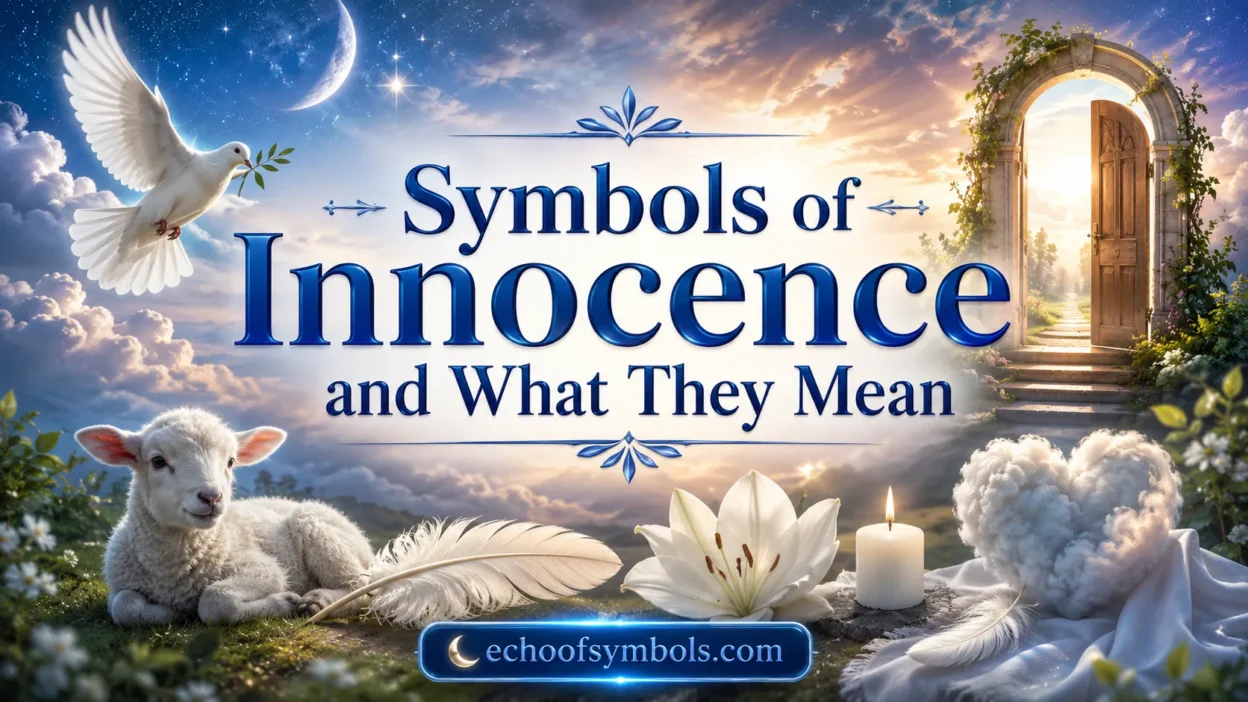
Symbols of innocence reveal innocence meaning through purity symbols, emotions, and timeless human experiences. Across cultures, these representations of innocence reflect childhood innocence, untainted wonder, and moments of peace.
Many people connect the white dove with dove symbolism, joy and purity, and spiritual hope. These cultural symbols also appear in religious contexts and personal traditions worldwide.
From butterfly symbolism to lamb symbolism, these images express wonder and beauty. They represent fresh starts, simplicity, and authenticity during important life transitions.
Through history, the phrase innocence symbols meaning has shaped art, faith, and human connections. Today, innocence remains linked with comfort, honesty, and emotional symbolism.
Also Read This: Dog With 2 Different Colored Eyes Spiritual Meaning and Symbolism
Quick Answer
Symbols of innocence represent purity, gentleness, and a fresh, untouched state of being. In the USA, they often appear as white doves, lambs, and children in religious art, weddings, and holidays. Across cultures, these same symbols can also point to peace, renewal, and spiritual protection.
TL;DR
• Innocence symbols include doves, lambs, white flowers, and children.
• Many of these images trace back to ancient and religious traditions.
• In the USA, they appear at weddings, baptisms, and Easter.
• The color white is closely tied to purity and moral goodness.
• Modern culture keeps these symbols alive through art and media.
• Meanings have shifted from strict virtue to broader emotional comfort.
What Symbols of Innocence Really Represent
Before looking at history, it helps to see how innocence symbols usually appear. This overview matters because their look shapes how people read the message.
Most innocence symbols share a few visual traits. Artists and designers lean on these traits again and again because people instantly recognize them.
• Soft white coloring suggests cleanliness and moral purity.
• Gentle, rounded shapes feel non-threatening and calm.
• Young or small figures, like babies and lambs, suggest a fresh start.
• Open, bright settings often frame these symbols in peaceful light.
• Quiet, still poses suggest trust and a lack of fear.
Historical Background and Ancient Roots
Symbols of innocence did not begin with modern greeting cards or nursery art. Many trace back thousands of years, long before Christianity spread across the world. Understanding these roots helps explain why these images still feel meaningful today.
Ancient and Pre-Christian Views
In many early societies, white animals and pale flowers stood out in nature. Because of this, people linked them to purity, the divine, or a life untouched by harm.
Some ancient cultures viewed innocence as something sacred and worth protecting. Others tied it to fragility, since untouched things could be easily lost or broken. Both ideas shaped the layered symbolism these images carry now.
Mythology and Legend
• Greek mythology linked doves to Aphrodite and tender, pure love.
• Celtic legend treated the white stag as a sign of renewal.
• Ancient pastoral cultures saw lambs as gentle, harmless creatures.
• Early folklore often used snow and white light to mark clean starts.
Symbols of Innocence in the USA
Symbols of innocence hold a strong place in American culture. Their meaning here is closely tied to religion, family life, and national ideas about childhood.
Early American communities, especially Puritan and colonial settlers, valued moral purity highly. Because of this, white and gentle imagery became common in art, clothing, and church life.
However, the meaning broadened over time. Today, many Americans connect innocence less to strict religious rules and more to comfort, honesty, and childhood wonder.
• Innocence symbols often appear in Easter and baptism traditions.
• White wedding dresses reflect purity and a fresh beginning.
• Children’s books use gentle animals to teach kindness and trust.
• Nursery decor leans on soft colors tied to new life.
Symbols of Innocence at a Glance: A Quick Reference Table
This table breaks down a few common innocence symbols and what they tend to mean in the USA today.
| Symbol | Meaning in the USA | Common Associations | Notes |
| White dove | Peace and purity | Weddings, funerals, hope | Often released at ceremonies |
| Lamb | Gentle sacrifice and purity | Easter, church art, baptism | Tied to Christian tradition |
| White lily | New beginnings and grace | Weddings, Easter, memorials | Linked to the Virgin Mary |
| Child or baby | Fresh start and trust | Nurseries, greeting cards | Seen as a blank slate |
| Snowflake | Uniqueness and quiet renewal | Winter holidays, art | No two are alike |
Symbols of Innocence in Christianity and Religious Art
Religious tradition shaped much of how Americans understand innocence today. This section looks closer at that influence, since it still guides modern imagery.
In Christianity, the lamb represents purity and sacrifice, often tied to Jesus Christ as the Lamb of God. The dove appears in stories about peace and the Holy Spirit, adding a spiritual layer to its gentle look.
• The lamb is common in children’s Bibles and baptism gifts.
• Doves often appear in stained glass and religious paintings.
• The lily is linked to the Virgin Mary’s purity and grace.
• Angels are frequently shown protecting or guiding innocent souls.
Cross-Cultural and Global Spiritual Meanings
Beyond Christianity, many cultures around the world attach spiritual meaning to similar symbols. These views are worth a brief look, since they shape how Americans read these images too.
• Native American traditions often see white animals as signs of peace.
• Hindu and Buddhist teachings link light, gentle creatures to a karma-free state.
• Japanese culture ties cherry blossoms to fleeting purity and simplicity.
• Eastern traditions often connect the lotus flower to spiritual cleanliness.
Across these traditions, innocence often points to something untouched by harm or wrongdoing. This shared thread is part of why these symbols feel so universal.
Emotional and Psychological Meaning of Innocence Symbols
Beyond history and religion, these symbols touch something personal for many people. Their meaning often mirrors emotions people quietly long for in daily life.
Because innocence suggests safety and trust, people often connect these images to comfort. This is one reason baby animals and soft colors show up so often in calming spaces.
• A longing for simplicity in a busy, complicated world.
• Comfort tied to memories of childhood and safety.
• Hope for a fresh start after a hard season.
• Trust in goodness, even when it feels rare.
• A quiet wish to protect what feels fragile or pure.
Innocence Symbols in Nature and Animals
Nature offers some of the clearest examples of innocence symbolism. This section focuses on animals and natural imagery, since they appear so often in American design and art.
• The lamb reflects gentleness, trust, and a calm nature.
• The fawn represents grace and a pre-fallen, untouched state.
• Butterflies suggest transformation paired with delicate beauty.
• Snowflakes remind people that even small things carry quiet wonder.
Innocence Symbols in Flowers and Color
Flowers and color carry heavy symbolic weight in American tradition. White, in particular, has long stood for cleanliness and moral goodness.
This association grew even stronger during the Victorian era, when flower meanings became a popular form of quiet communication. Many of those meanings still shape wedding and funeral traditions today.
• White lilies represent purity, grace, and new beginnings.
• White roses suggest fresh starts and untainted love.
• Daisies are tied to simplicity and childhood wonder.
• White as a color signals cleanliness and calm across settings.
Modern Usage: Art, Media, and Everyday Life
Today, symbols of innocence show up far beyond religious settings. This section looks at how Americans use these images in daily life, media, and personal style.
Home and Design
Soft, innocent imagery is popular in home decor, especially in nurseries and family spaces. People often choose these symbols to create a calm, welcoming feel.
• Pastel colors and gentle animal prints are common nursery choices.
• Dove and lamb motifs appear in baby shower and christening gifts.
• Soft lighting is often paired with white or cream color schemes.
Media and Pop Culture
Movies, books, and social media keep innocence symbolism alive for new generations. These images often signal a character’s purity or a story’s emotional tone.
• Children’s films often use soft animals to represent trust and kindness.
• Social media posts about babies or pets often lean on innocence themes.
• Greeting cards frequently pair doves or lambs with messages of hope.
Symbols of Innocence in American Holidays
Innocence symbolism connects closely to several major American holidays. This link helps explain why these images feel so familiar each year.
Easter stands out as the clearest example, with lambs, lilies, and pastel colors filling churches and homes. Christmas and other winter holidays also lean on gentle, quiet imagery tied to renewal.
• Easter services often feature lamb and lily imagery together.
• Baby showers and christenings lean heavily on innocence symbols.
• Winter holidays use snowflakes to suggest quiet renewal.
• Weddings often include white flowers and doves for good luck.
Misunderstandings, Misuse, and Controversies
Like many gentle symbols, innocence imagery can be misunderstood or used carelessly. It helps to separate traditional, respectful meaning from modern misuse.
Commercial products sometimes overuse innocence symbols just to seem wholesome or trustworthy. This can water down the deeper spiritual or emotional meaning behind the image.
There is also a difference between celebrating childhood innocence and using childlike imagery in ways that feel exploitative or inappropriate. Respectful use always keeps the focus on comfort, protection, and genuine purity.
• Overuse in advertising can weaken a symbol’s original meaning.
• Innocence themes should never be used to mislead or manipulate.
• Respectful use protects the dignity tied to childhood imagery.
• Cultural context matters when borrowing symbols from other traditions.
How Symbols of Innocence Have Shifted Over Time
Innocence symbolism has changed a great deal across history. Looking at this shift helps explain why older and newer meanings can feel a little different.
In earlier centuries, innocence was tightly linked to strict moral and religious rules. Over time, the meaning softened into something broader, focused more on comfort and emotional honesty.
• Strict religious meanings have become less rigid over time.
• Innocence now often points to emotional comfort, not just morality.
• Pop culture has widened these symbols beyond religious settings.
• Modern audiences connect innocence more to childhood memory than doctrine.
FAQs
What Are Symbols of Innocence and What Do They Represent?
Symbols of innocence represent purity, hope, and childhood innocence through meaningful images. They often show wonder and beauty, honesty, and the purest moments of life.
What Is The Innocence Meaning Behind A White Dove?
The innocence meaning of a white dove comes from dove symbolism connected with peace, divine meaning, and purity and protection. It is also seen as one of the most recognized universal symbols.
Why Are Butterfly Symbolism and Lamb Symbolism Linked With Innocence?
Butterfly symbolism reflects transformation, unspoiled beauty, and gentle change, while lamb symbolism represents kindness and moral innocence. Both are common symbolic animals connected with innocence.
How Do Different Cultures Use Purity Symbols?
Many cultures use purity symbols in art, traditions, and religious contexts. These cultural symbols often express spiritual ideals, hope, and meaningful human values.
What Is The Difference Between Ignorance And Innocence?
Ignorance and innocence are different because innocence reflects openness and trust, while ignorance means a lack of knowledge. Knowledge and awareness can change innocence into deeper understanding over time.
Conclusion
Understanding symbols of innocence helps us recognize the deeper innocence meaning behind timeless images of purity, hope, and connection. From dove symbolism to butterfly symbolism, these universal symbols reflect childhood innocence, wonder and beauty, and meaningful human emotions. Across cultures and traditions, purity symbols continue to represent spiritual ideals, peace, and the beauty of life’s simplest moments. These representations of innocence remind us to protect kindness, honesty, and compassion in a changing world.