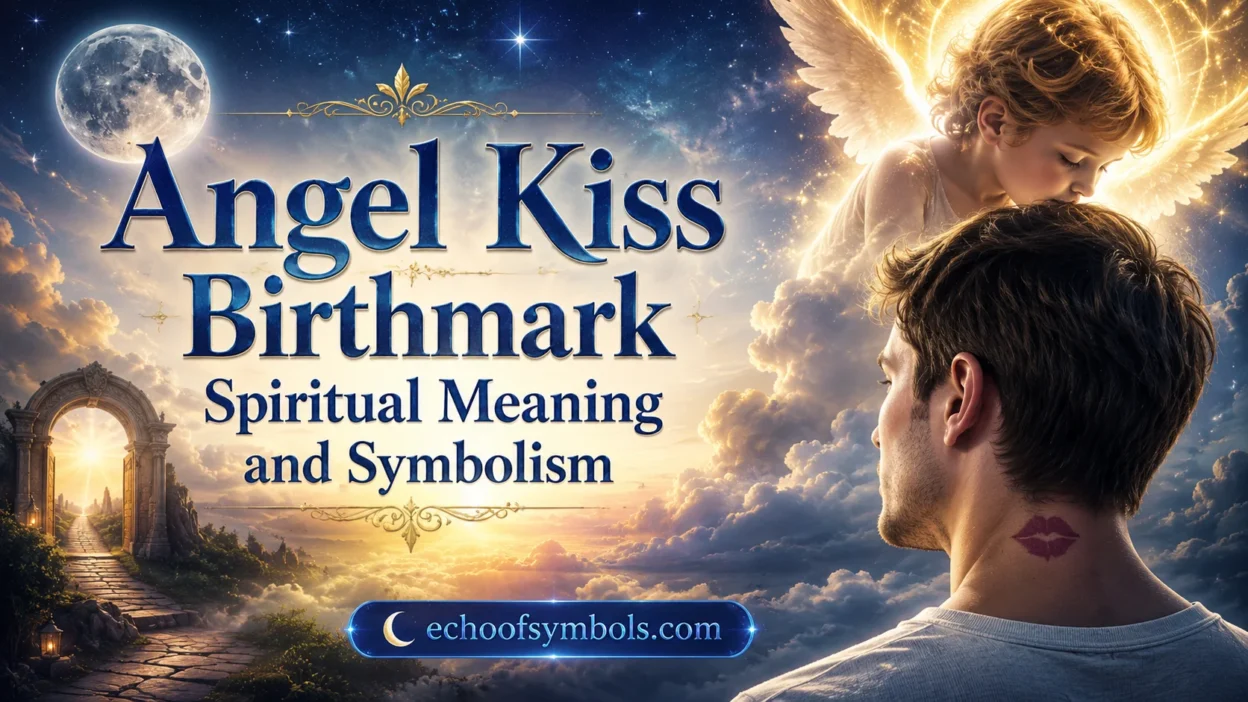
An angel kiss birthmark often sparks curiosity through touching birth stories and lasting family beliefs. Many people explore its spiritual meaning, symbolism, and possible divine connection with genuine interest. This gentle pink birthmark usually appears on a newborn baby as a harmless skin feature.
Medically, it is known as nevus simplex, salmon patch, or stork bite, a harmless birthmark that often fades with time. Many beliefs, folklore, and cultural meanings describe this angel kiss as a heavenly blessing. Some view this angel’s kiss as divine protection, divine guidance, and a loving guardian angel watching nearby.
Others connect its spiritual symbolism with spiritual purpose, life purpose, destiny, faith, hope, and spiritual awakening. This guide explores trusted medical facts, meaningful interpretation, enduring traditions, and the fascinating symbolic meaning behind this remarkable birthmark.
Also read this: White Pigeon Symbolism: Peace, Hope, and Meaning
Quick Answer
The Angel Kiss Birthmark Spiritual Meaning and Symbolism in the United States generally points to divine protection, love, and a gentle blessing at birth. Many parents see it as a sign their child is watched over, while some spiritual traditions link it to intuition or a special soul purpose. Medically, the mark is a harmless and common vascular birthmark that often fades on its own.
TL;DR
- Angel kiss birthmarks are soft pink or red marks seen on newborns’ faces
- In the USA, they are linked to protection, love, and gentle beginnings
- Older cultures saw similar marks as signs from spirits or fate
- Christian imagery shapes much of the American interpretation
- Modern parents share the story through photos and family traditions
- Medically, the mark is called nevus simplex and is completely harmless
What Is an Angel Kiss Birthmark?
An angel kiss birthmark is a flat, pink or reddish patch that often appears on a baby’s forehead, eyelids, nose, or upper lip. It happens because tiny blood vessels sit close to the surface of thin newborn skin. Because of this, the mark can look brighter when a baby cries, laughs, or gets warm.
Doctors call this mark a nevus simplex, though families rarely use that term at home. Instead, the softer nickname “angel kiss” is used in nurseries, parenting books, and baby scrapbooks across the country. This name change matters because it shifts the tone from clinical to comforting.
How It Looks in Real Life
- A light pink or salmon colored patch on the face
- Flat rather than raised, with soft, uneven edges
- More visible during crying, straining, or temperature changes
- Often paired with a similar mark on the back of the neck
- Usually smaller than a coin, though size can vary
- Typically fades within the first one to three years
Core Meanings at a Glance
Before going deeper into history, it helps to see the main ideas people attach to this mark today. In American spiritual storytelling, three themes come up again and again.
The Three Most Common Themes
- A sign of divine protection watching over the child
- Proof of being loved and chosen before birth
- A hint of spiritual sensitivity or gentle intuition
Because the mark shows up right at birth, people naturally connect it to new beginnings. Also, its placement on the face feels personal and close, which makes the symbolism feel more intimate than a mark hidden elsewhere on the body. Together, these details help explain why the idea has stuck around for generations.
Historical and Ancient Roots of Birthmark Symbolism
Long before the phrase “angel kiss” existed, people already looked for meaning in body marks. This section traces those older roots, since they still shape how Americans think about the topic today.
Pre-Christian and Ancient Beliefs
In many ancient societies, unusual marks on the skin were treated as messages rather than accidents. Some communities believed spirits or ancestral forces touched a child before birth, leaving a visible trace behind. Others tied marks to fate, reading them almost like a private symbol placed by unseen forces.
These early beliefs were not identical across regions, but they shared a common thread. A mark on the body was rarely seen as random. Instead, it was treated as a small message worth interpreting.
Medieval and Folk Traditions
By the medieval period in Europe, angels had become familiar figures in art, prayer, and storytelling. Because angels were already seen as gentle protectors, it was a natural step for folk tradition to link soft facial marks with an angel’s touch. Over time, this framing softened fears parents may have felt about unexplained marks on their newborns.
From Folklore to Modern Naming
While the exact phrase “angel kiss” feels modern, the emotional idea behind it is not new at all. It borrows from centuries of folk belief that turned mysterious body marks into comforting, protective stories. Today’s version simply carries that same instinct into a modern, English-speaking context.
Angel Kiss Birthmark Spiritual Meaning in the USA
This section focuses on the heart of the topic: how this symbolism plays out for American families today. It matters because these interpretations shape parenting stories, baby books, and even casual conversations at family gatherings.
In the United States, Christian imagery strongly influences how people talk about angel kiss birthmarks. Angels are widely understood as messengers and guardians, so linking a birthmark to an angel fits naturally into everyday belief, even among people who are not deeply religious. However, it is worth noting that most churches do not formally teach that birthmarks carry spiritual meaning. Instead, these stories are passed down informally through families rather than through official doctrine.
Common American Interpretations
- Guardian angels watching closely over a newborn
- A gentle, unspoken sign of God’s presence
- Innocence and purity connected to the moment of birth
- A private family blessing rather than a public religious claim
Everyday Use of the Term
Parents across the country often prefer the phrase “angel kiss” over clinical language. Instead, it softens any early worry and adds warmth to the birth story. This term shows up in baby books, newborn photography sessions, and family scrapbooks. Because of that, it has become part of shared American parenting culture, not just a private belief.
Angel Kiss Birthmark on Forehead Spiritual Meaning
Placement plays a big role in how people interpret these marks, and the forehead is one of the most talked about locations. Because the forehead sits near the eyes and mind, many spiritual interpretations connect it to awareness and inner thought.
Why the Forehead Feels Symbolic
- Seen as a sign of inner wisdom or quiet intuition
- Linked in some traditions to focus and mental clarity
- Viewed as a gentle, visible reminder of protection during infancy
- Considered especially meaningful since it is the first thing people notice
Angel Kiss Birthmark on Neck and Back Spiritual Meaning
Marks on the back of the neck are often called stork bites rather than angel kisses, though both come from the same medical cause. In folklore, the neck carries its own symbolism because it connects the head to the rest of the body.
The Symbolic Weight of a Hidden Mark
- Associated with steadiness, trust, and quiet strength
- Sometimes tied to protection carried from behind, unseen by the child
- Viewed as a subtle sign rather than an obvious one, since it is hidden by hair
- Often outlasts facial marks, which leads some to see it as longer lasting protection
Angel Kiss Birthmark on Eyelids and Nose Meaning
Eyelid and nose marks are common too, and they carry their own gentle folklore. Because the eyes are often linked to perception, some spiritual interpretations connect eyelid marks with sensitivity or dream awareness.
Delicate Marks, Delicate Meanings
- Eyelid marks are sometimes linked to intuition or vivid dreaming
- Nose placement is occasionally tied to curiosity and alertness
- Both are seen as delicate reminders rather than dramatic signs
- These marks usually fade fastest, adding to their gentle symbolism
Cross-Cultural and Spiritual Meanings Around the World
While the phrase “angel kiss” is mostly American and European, similar ideas about birthmarks appear worldwide. This section offers a brief, respectful look at how other traditions understand these marks, without ranking one belief above another.
A Shared Human Instinct
- Some Asian traditions link birthmarks to past life connections or karma
- Certain folklore traditions treat birthmarks as signs of destiny or fate
- Indigenous storytelling in various regions sometimes ties marks to ancestral or soul connections
- European folk tales occasionally describe marks as touches from fairies or spirits
These interpretations are not interchangeable, since each comes from its own cultural and historical background. Still, they reveal a shared human habit. People across time and geography have looked at birth and searched for meaning in the smallest details.
Emotional and Psychological Associations
Beyond belief systems, this symbolism carries real emotional weight for many families. This section looks at why that happens, since feelings often matter more than literal interpretation.
Many parents feel comforted when they hear a gentle spiritual explanation for an unexpected mark. Instead of worry, the story creates reassurance during an emotional and uncertain time. This shift from confusion to comfort is a big part of why the term has stayed popular.
From Uncertainty to Reassurance
- A sense of protection during a vulnerable newborn stage
- Emotional bonding built through shared family storytelling
- Quiet pride in a child’s unique appearance
- A feeling of being chosen or specially watched over
As children grow, some are told the story behind their mark long after it fades. This can shape self image in small but lasting ways, often encouraging a feeling of being unique or cared for.
Modern Usage: Tattoos, Social Media, and Family Storytelling
Symbolism does not stay still, and this idea has clearly moved into modern spaces. This section covers how the phrase shows up in everyday American life today, especially online.
Where the Symbolism Shows Up Today
- Shared in newborn photo captions and baby announcement posts
- Referenced in parenting blogs and pregnancy forums
- Occasionally inspires small tattoo designs chosen by parents or grown children
- Mentioned in home decor items like nursery art and keepsake boxes
- Used as a gentle nickname that sticks even after the mark disappears
Because platforms encourage personal storytelling, the phrase “angel kiss” travels easily between generations. A grandmother’s comforting explanation can now reach thousands of readers through a single online post.
Angel Kiss Birthmark vs Stork Bite: Clearing Up Confusion
Many people use “angel kiss” and “stork bite” interchangeably, but the terms usually describe location rather than a different condition. Clearing this up helps readers separate folklore language from medical language.
A Side-by-Side Comparison
| Context | Meaning in the USA | Common Associations | Notes |
| Forehead or eyelid mark | Divine protection, gentle blessing | Innocence, intuition | Often called “angel kiss” |
| Back of neck mark | Quiet strength, hidden protection | Steadiness, trust | Often called “stork bite” |
| Nose or upper lip mark | Curiosity, alertness | Uniqueness | Usually fades quickly |
| Any location, medically | Vascular birthmark, harmless | Not tied to health risk | Known as nevus simplex |
| Persisting into adulthood | Lasting personal symbol | Identity, individuality | More common with neck marks |
Both terms describe the same type of vascular birthmark. However, the nickname used often depends purely on where the mark appears on the body.
Common Misunderstandings, Myths, and Controversies
Not every belief about these marks is comforting, and some ideas need careful context. This section explains a few common misunderstandings so readers can separate playful folklore from harmful assumptions.
Separating Folklore From Fact
- Some older superstitions wrongly link visible marks to illness or danger
- A small number of outdated folk beliefs frame certain birthmarks in a negative light
- These negative framings are largely considered outdated and are not widely accepted today
- Medical sources are clear that these marks are not caused by anything a parent did during pregnancy
It is important to separate cultural storytelling from medical fact. While the spiritual meaning is a matter of personal or family belief, the physical mark itself is a well understood and harmless vascular feature. Neither interpretation should be used to shame or frighten a family.
How Meanings Have Shifted Over Time
Symbolism rarely stays fixed, and this topic shows a clear shift across generations. Understanding that shift helps modern readers see where today’s ideas actually came from.
From Superstition to Comfort
Older folk traditions sometimes treated any unusual birthmark with caution or superstition. Over time, especially through Christian era storytelling, the tone moved toward comfort rather than warning. In contrast, today’s American use of “angel kiss” leans almost entirely positive, focusing on love, protection, and gentle beginnings.
Meanwhile, social media has added a modern layer. Personal stories now spread faster than ever, which has helped soften and standardize the meaning across different communities. Some older, more mixed interpretations have quietly faded, while the warm, protective version has become the dominant one in American culture.
What This Symbolism Signals About Identity and Values
For many families, choosing to share this story is not just about the mark itself. Instead, it reflects certain values that matter to them.
What the Story Reveals About Families
- A preference for gentle, comforting language around a child’s body
- An openness to blending spirituality with everyday parenting
- A desire to give ordinary moments a sense of meaning
- Appreciation for uniqueness rather than uniformity
These themes explain why the phrase continues to resonate, even among families who do not follow an organized religion.
FAQs
What is an angel kiss birthmark and what is its spiritual meaning?
An angel kiss birthmark is a common vascular birthmark called nevus simplex, often appearing as a pink birthmark on a newborn baby. Many beliefs, folklore, and spiritual symbolism describe it as a heavenly blessing, divine connection, or protective sign linked with guardian angel care.
Is an angel’s kiss different from a stork bite?
No, an angel’s kiss and a stork bite are both forms of nevus simplex, although their locations differ. An angel kiss usually appears on the forehead, eyelids, or nose, while a stork bite commonly appears on the neck, and both are generally harmless birthmark types that often fade with time.
What do different cultures and folklore say about an angel kiss birthmark?
Across many cultures, folklore tradition, and cultural meanings, an angel kiss birthmark is viewed as a divine blessing, angelic touch, or sacred mark. Some traditions associate it with spiritual purpose, destiny, life purpose, faith, and a lifelong connection with a higher power.
Should parents worry if their newborn has an angel kiss birthmark?
In most cases, there is no reason for concern because this birthmark is a common skin feature and not a rash or hemangioma. Medical facts show that these salmon patches are harmless and usually become less noticeable as the child grows.
Can an angel kiss birthmark really symbolize good fortune or a spiritual journey?
There is no scientific evidence supporting these ideas, but many people enjoy the symbolic meaning found in folklore beliefs and personal interpretation. Some believe it reflects divine guidance, good fortune, a meaningful spiritual journey, spiritual awakening, or even a soul connection, while others simply appreciate it as a unique birth symbolism.
Conclusion
In the end, an angel kiss birthmark beautifully combines spiritual meaning, symbolism, and trusted medical facts, offering both wonder and understanding. Whether you see it as a heavenly blessing, divine protection, guardian angel guidance, or simply a harmless nevus simplex birthmark, its meaning often reflects personal beliefs, folklore, and cultural meanings. By exploring both spiritual traditions and medical perspectives, you can appreciate this unique pink birthmark with greater confidence, respect, and curiosity while embracing its lasting symbolic meaning.